
🏆 All-Time Record Shattered in 2025
TOPIK test takers surpassed 550,000, proving that Korean language learning is booming worldwide
Created: | Last updated:
TOPIK test preparation is more important than ever. With over 550,000 people taking the Test of Proficiency in Korean (TOPIK) in 2025 alone, this exam has evolved far beyond a simple language test — it’s now a global benchmark for anyone serious about Korean language and culture.
The rapid expansion of the online IBT format, the rollout of the TOPIK Speaking test, and new testing centers in 17 countries have dramatically reshaped the landscape. Meanwhile, the Korean Ministry of Education has announced a total of 15 exam sessions for 2026, giving learners more opportunities than ever. Yet many test takers still underestimate the exam’s hidden difficulty and the importance of a targeted strategy.
In this article, we’ll break down the real difference in difficulty between TOPIK I and TOPIK II, reveal the scoring secrets behind each level, walk you through the new IBT and Speaking test formats, and share proven strategies for 2026 and beyond.
What Is TOPIK: Structure and Test Format Explained

The Test of Proficiency in Korean (TOPIK) is the official Korean language proficiency exam for non-native speakers and overseas Koreans. Since its launch in 1997, it has been the only government-authorized test that objectively measures Korean language ability — and it’s recognized worldwide for university admissions, employment, and immigration purposes.
🎯 Why TOPIK matters
Your TOPIK score is the key to real-world opportunities: university admission, job applications, and visa eligibility in Korea
The three types of TOPIK exams
TOPIK I (Beginner)
- Target: Level 1–2 candidates
- Duration: 100 minutes
- Sections: Listening and Reading
- Questions: 70 total
- Format: Multiple choice only
TOPIK II (Intermediate–Advanced)
- Target: Level 3–6 candidates
- Duration: 180 minutes
- Sections: Listening, Reading, and Writing
- Questions: 54 total
- Format: Includes essay writing
The current system was reorganized in 2014, and both PBT (paper-based) and IBT (internet-based) formats are now available. As of 2026, the IBT is offered in 17 countries and expanding rapidly. You can find the latest schedules and registration details at the official TOPIK website. For a complete breakdown of the 2026 TOPIK test schedule, including all 15 exam dates, check our companion guide.
TOPIK I vs TOPIK II: The Hidden Difficulty Gap

What catches many learners off guard is that the jump from TOPIK I to TOPIK II isn’t just a step up in difficulty — it’s a completely different exam. The data tells a striking story.
The pitfalls of TOPIK I: easier than it looks — but tricky
TOPIK I might seem straightforward since it’s all multiple choice, but don’t let that fool you. It demands precise vocabulary knowledge and grammar accuracy. The listening section requires you to pick up subtle nuances in everyday conversations, while the reading section tests your ability to quickly locate key information in short texts.
💡 The secret to acing TOPIK I
Master 2,000 core vocabulary words + drill basic grammar patterns until they’re second nature
The real challenge of TOPIK II: the writing wall
The biggest game-changer in TOPIK II is the writing section. It’s no longer about understanding Korean — it’s about expressing your ideas logically and coherently in writing. Questions 51–52 require intermediate-level composition, while questions 53–54 demand advanced essay skills at a college-level standard.
According to the National Institute for International Education (NIIED), the advanced writing tasks in TOPIK II require the kind of academic writing you’d find in a Korean university liberal arts course.
TOPIK Test Preparation: Scoring System and Pass Rates

TOPIK uses an absolute scoring system, but in practice, there’s a relative element at play. The difficulty of each test administration subtly shifts the effective cutline, even though the official score thresholds remain fixed.
TOPIK I score thresholds
TOPIK II score thresholds
A sobering reality
Only about 15% of all TOPIK II test takers achieve Level 5 or higher
Why the writing section is the key variable
In TOPIK II, the writing section carries 100 out of 300 total points — a full third of your score. Question 54 alone (the essay question) is worth 60 points. That single question can literally determine whether you advance to the next level or fall short.
Effective TOPIK Test Preparation Strategies

Successful TOPIK test preparation goes beyond just improving your Korean — it requires a targeted approach, because each level demands different core skills.
TOPIK I strategy (targeting Levels 1–2)
Phase 1: Build core vocabulary (2 weeks)
- Memorize the 1,500 most frequently tested vocabulary words
- Learn everyday expression patterns and set phrases
- Master basic particles and verb endings
Phase 2: Intensive listening training (3 weeks)
- Listen to short dialogues on repeat and shadow the audio
- Practice identifying main ideas through keyword recognition
- Study common phrases used in everyday situations
Phase 3: Build reading speed (3 weeks)
- Practice skimming (for main ideas) and scanning (for details)
- Train yourself to infer unfamiliar vocabulary from context
- Do timed practice sessions to improve time management
TOPIK II strategy (targeting Levels 3–6)
TOPIK II demands balanced preparation across all three sections. The writing section in particular requires a systematic approach — it’s not something you can cram for.
Listening (100 points)
- Expose yourself to varied content: lectures, news, debates, interviews
- Use note-taking techniques to capture key points while listening
- Practice making inferences and reading between the lines
Reading (100 points)
- Read academic texts, newspaper editorials, and opinion pieces
- Study how arguments are structured (thesis, evidence, conclusion)
- Drill fill-in-the-blank and paragraph-ordering questions
Writing (100 points)
- Questions 51–52: Learn templates for describing graphs, charts, and data
- Questions 53–54: Master the intro–body–conclusion essay structure
- Time management: spend 20 minutes on 51–52 and 30 minutes on 53–54
What every high scorer has in common
1 hour of consistent daily study + 2 practice tests per week + targeted work on your weakest section
For free study resources, the National Institute of the Korean Language offers vocabulary lists and learning materials specifically designed for TOPIK preparation.
Practical Benefits of Each TOPIK Level
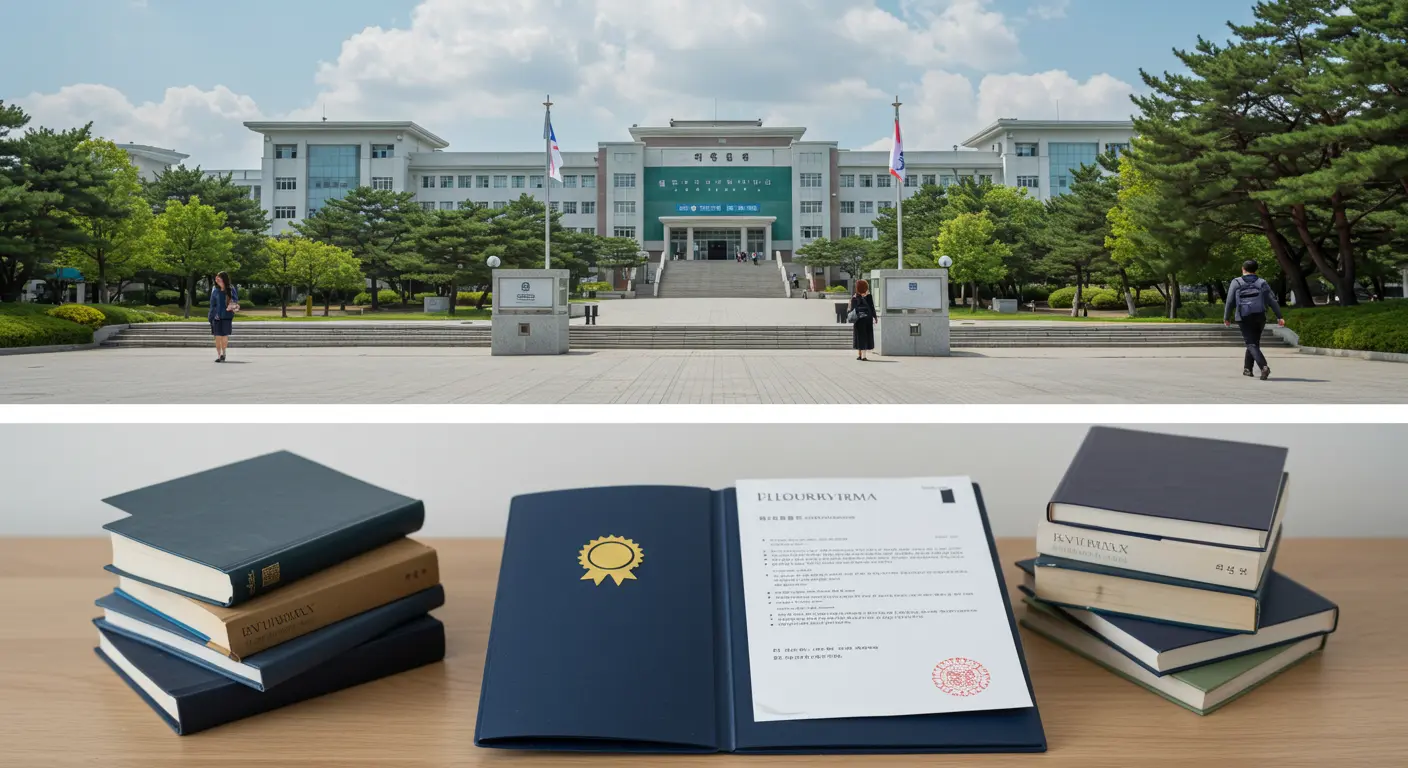
Your TOPIK level isn’t just a score on paper — it unlocks specific, tangible opportunities. Understanding exactly what each level makes possible can be a powerful motivator for your studies.
University admissions and academics
Level 3
- Qualify for advanced Korean language institute classes
- Become eligible for exchange student programs
- Earn Korean language teaching assistant credentials
Level 4
- Apply for undergraduate programs at Korean universities
- Gain preference in GKS (government scholarship) selection
- Meet the requirement for Korean Studies-related majors
Level 5+
- Apply for graduate school at Korean universities
- Earn extra points on professional employment applications
- Qualify for Korean language teacher certification
Employment and immigration benefits
For foreigners planning to work or live in Korea long-term, your TOPIK score is a critical factor. It directly affects your visa eligibility — especially for the E-7, F-2, and F-5 visa categories.
TOPIK requirements by visa type
For the most up-to-date visa and immigration details, check Hi Korea, the Korean immigration portal.
Key TOPIK Changes and Trends in 2026
The TOPIK test landscape has shifted significantly heading into 2026. From the explosive growth in test takers to major format expansions, here’s what you need to know to stay ahead.
Record-breaking growth
The numbers tell the story of Korean language learning’s meteoric rise: 360,000 test takers in 2022, jumping to 420,000 in 2023, then 490,000 in 2024, and an all-time record of over 550,000 in 2025 (through September alone). This growth has pushed the Korean Ministry of Education to dramatically expand test availability.
Major changes for 2026
1. 15 exam sessions per year
- Breakdown: 6 PBT (paper-based) + 6 IBT (internet-based) + 3 Speaking tests
- Impact: More scheduling flexibility — no more waiting months between opportunities
- Note: PBT is being gradually phased out in favor of IBT over the coming years
2. IBT expansion to 17 countries
- New in 2026: India, Nepal, Laos, and Bahrain join the IBT country roster
- Key difference: IBT results come in roughly 3 weeks vs. 6–7 weeks for PBT
- Preparation tip: Practice Korean typing — your typing speed directly affects your writing score
3. AI-enhanced grading system
- Impact: More consistent and standardized evaluation of writing responses
- What this means: Spelling, spacing, and grammatical precision matter more than ever
- Strategy shift: Focus on clear structure and accuracy over creative expression
4. Increasing weight of cultural context
- Trend: More questions testing understanding of modern Korean society and culture
- Preparation: Stay current with Korean news, social media trends, and K-culture
- Takeaway: Traditional textbooks alone are no longer sufficient
Your 2026 TOPIK preparation keywords
Digital readiness + Korean typing skills + real-world Korean + cultural literacy
TOPIK Speaking Test: What You Need to Know
One of the most significant developments in recent years is the TOPIK Speaking test, which launched in November 2022 and continues to expand. While it’s currently administered separately from TOPIK I and II (and only in Korea for now), it’s rapidly becoming a critical component of Korean language certification.
TOPIK Speaking format
- Duration: 30 minutes total
- Questions: 6 speaking tasks
- Max score: 200 points
- Format: Computer-based (record spoken responses via headset)
- Sessions in 2026: 3 (March, June, October)
TOPIK Speaking levels
- Level 1: 20–49 points
- Level 2: 50–89 points
- Level 3: 90–109 points
- Level 4: 110–129 points
- Level 5: 130–159 points
- Level 6: 160–200 points
While the Speaking test is still optional and not yet required for most university admissions or visa applications, experts expect it to become mandatory within the next few years. Starting your speaking preparation now will give you a significant advantage. For complete 2026 test dates and registration details, see our TOPIK schedule and Speaking test guide.
High-Score Tips for TOPIK Test Preparation

Here are battle-tested strategies from real high-scorers that can make the difference between a good score and a great one.
Test-day time management
TOPIK I (100 minutes)
- Listening: 40 minutes (30 minutes for questions + 10 minutes for review)
- Reading: 60 minutes (50 minutes for questions + 10 minutes for review)
TOPIK II (180 minutes)
- Listening: 60 minutes (stay focused — this section is played once only)
- Writing: 50 minutes (20 minutes for Q51–52, 30 minutes for Q53–54)
- Reading: 70 minutes (60 minutes for questions + 10 minutes for review)
Section-specific strategies
Listening
- Read the questions and answer choices before the audio plays
- Focus on keywords and take quick notes while listening
- If you miss an answer, move on immediately — don’t lose focus on the next question
Reading
- Read the questions first to know what you’re looking for
- Skim for overall structure, then scan for specific details
- When running short on time, tackle the easiest remaining questions first
Writing (TOPIK II only)
- Q51–52: Prepare a template for graph and chart descriptions beforehand
- Q53–54: Follow the intro–body–conclusion structure strictly
- Always save 5 minutes at the end for proofreading spelling and spacing
IBT-specific preparation
If you’re taking the IBT format, there are additional skills to develop. Practice Korean typing extensively — aim for at least 200 characters per minute. Familiarize yourself with the on-screen interface by using the official TOPIK IBT practice environment. And have a backup plan for potential technical issues like screen freezes or audio delays.
The number one piece of advice from high scorers
Don’t aim for perfection — focus on getting every question you know right
Frequently Asked Questions (FAQ)
Should I take TOPIK I or TOPIK II first?
It depends on your current level. If you’re still building basic grammar and vocabulary, start with TOPIK I, aim for Level 2, and then move up to TOPIK II. But if you’re already at an intermediate level (roughly 6+ months of consistent study), it’s more efficient to go straight to TOPIK II — you can still earn a Level 3 even if the advanced sections are challenging.
How long does TOPIK preparation take from scratch?
For complete beginners studying 2–3 hours daily, reaching TOPIK II Level 3–4 typically takes 12–18 months. This varies significantly based on your native language, prior language-learning experience, and study intensity. Speakers of Japanese or Chinese may progress faster due to shared vocabulary and grammatical similarities with Korean.
How long are TOPIK scores valid?
Your TOPIK score report is valid for two years from the date results are announced. Keep this expiration in mind when planning university applications, job searches, or visa submissions. After it expires, you’ll need to retake the test.
What’s the difference between PBT and IBT?
The test content and difficulty are identical — your PBT and IBT scores carry equal weight for admissions and employment. The key differences are format (paper vs. computer), result speed (IBT results come in about 3 weeks vs. 6–7 weeks for PBT), and availability (IBT is offered in 17 countries as of 2026). For the IBT writing section, strong Korean typing skills are essential.
Does TOPIK Level 6 mean I’m fluent in Korean?
TOPIK Level 6 represents very high proficiency, but it doesn’t mean full native-speaker fluency. The test doesn’t cover slang, dialects, or rapidly evolving internet language. Even after achieving Level 6, continued immersion through real-life conversations, Korean media, and daily use is key to reaching true fluency.
What are the best study materials for TOPIK?
Official past exams are your most valuable resource — download them free from the NIIED website. Supplement with EBS TOPIK courses and Korean language institute materials. Beyond textbooks, consistent exposure to Korean media (news, dramas, webtoons, podcasts) builds the real-world comprehension skills that the test increasingly demands.
Is the TOPIK Speaking test required?
As of 2026, the Speaking test is optional and conducted separately from TOPIK I and II. It’s currently available only in Korea, with 3 sessions per year. While not yet mandatory for most university admissions or visa applications, it’s expected to become increasingly important. Preparing early gives you a competitive edge.
Final Words: Your Roadmap to TOPIK Success
TOPIK test preparation is about more than chasing a score — it’s about building genuine command of the Korean language and deep understanding of Korean culture. The fact that over 550,000 people took TOPIK in 2025 shows just how global the demand for Korean language skills has become — and it also means competition is fiercer than ever.
The good news? With a structured plan and the right strategy, your target level is absolutely within reach. The single most important factor isn’t talent or expensive courses — it’s consistency. Even 30–60 minutes of focused daily study beats weekend cramming sessions every time.
Whether you’re aiming for Level 2 to prove your basics or Level 6 to unlock advanced opportunities, start today, stay consistent, and trust the process. Your TOPIK journey is an investment in your future. Good luck!
Explore more guides for life in Korea
Public Transportation Guide for Foreigners in Korea | A Day in the Life of an Expat in Seoul