After more than six years of practicing at a Gangnam dermatology clinic and treating thousands of international patients, I’m sharing the Korean skincare routine science that actually works—backed by clinical data, not hype. We won’t just say “follow these 10 steps.” This 2026 update explains why the steps come in this exact order, how each ingredient works, and how the latest regenerative K-beauty trends fit into a routine you can actually follow.
This article is for informational purposes only. If you have any individual skin conditions, allergies, or specific concerns, please consult your dermatologist. We recommend a patch test before using any new product, and if you experience any adverse reactions, discontinue use immediately and seek professional advice.
- 1The Science Behind Korean Skincare Routine Science
- 2Korean Skincare Routine Science: Basic Cleansing Steps (Steps 1-2)
- 3 Korean Skincare Routine Science: Skin Preparation (Steps 3-5)
- 4Intensive treatment phase (steps 6-8)
- 5Protect and finalize (steps 9-10)
- 6Personalized routines by skin type
- 7How to apply K-beauty abroad in 2026
- 8Frequently asked questions (FAQ)
💡 What you get for reading this article
- Scientific basis: Clinical study data and ingredient breakdowns for each step
- 2026 trend update: Where PDRN, exosomes, and “skin longevity” actually fit in a routine
- How to personalize: Custom routines based on your skin type and where you live
- Practical tips: Product substitutions and buying advice that work internationally
- Cost-effectiveness: Product recommendations and prioritization by budget
1. The Science Behind Korean Skincare Routine Science

A surprising question from my first foreign patient
Back in 2019, a patient from the U.S. asked me, “Do you really need all 10 steps? In the U.S., they say 3 steps are enough…” That’s when I realized I needed to explain the science, not just say “follow the Korean way.” Years later, that question matters more than ever—because K-beauty itself has changed.
🆕 What changed in K-beauty by 2026: From “glass skin” to skin longevity
The biggest shift I’ve seen in my clinic over the past two years: K-beauty has moved beyond the hydration-first “glass skin” era into regenerative skincare. Clinic-grade actives like PDRN (salmon DNA) and exosomes—once available only through dermatologist procedures like Rejuran—are now sold as everyday serums and ampoules at Olive Young. The industry conversation has also pivoted from “anti-aging” to skin longevity: strengthening the barrier and microbiome proactively rather than treating damage after it appears. The 10-step framework hasn’t changed—but what goes into steps 5 and 6 has evolved dramatically. I’ll flag these 2026 updates throughout this guide.
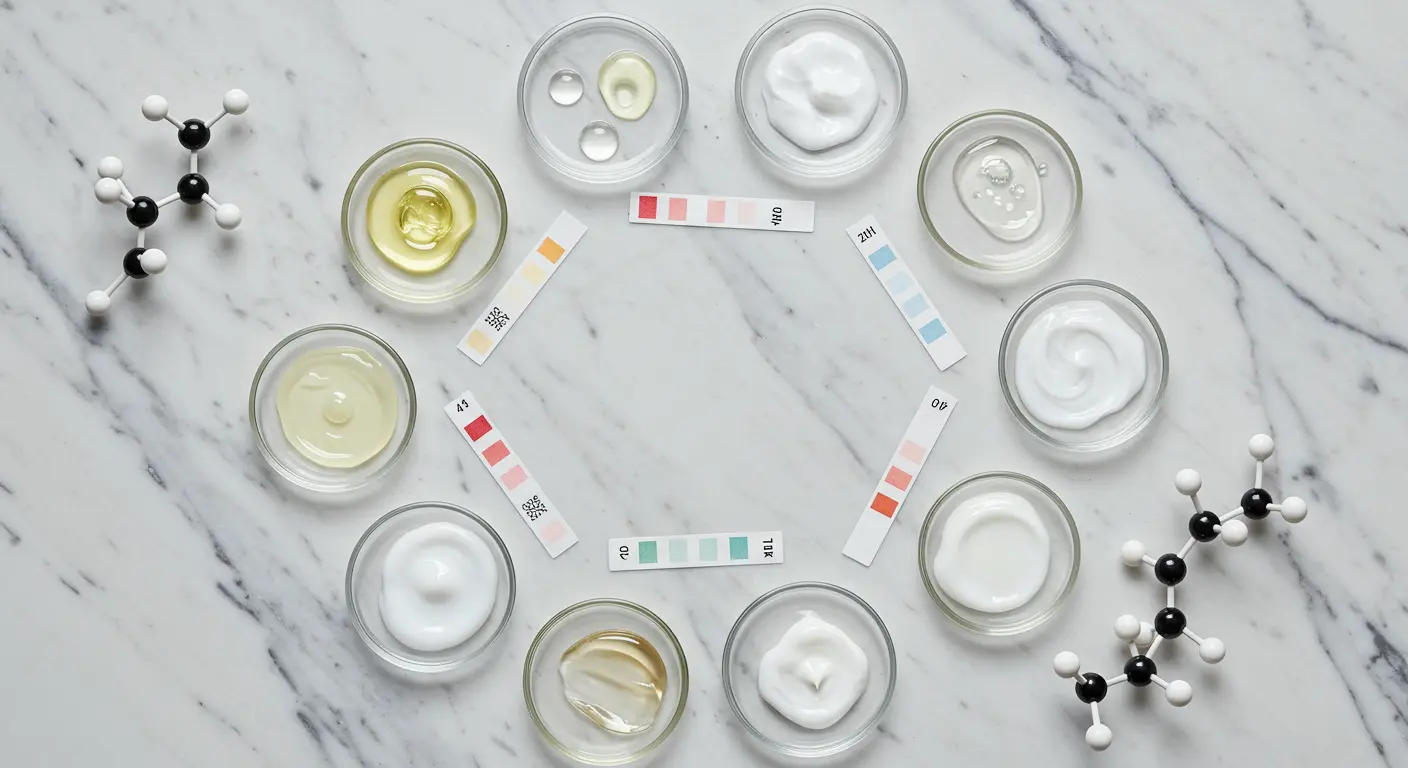
🔬 The science of pH and the order of penetration
According to skin barrier research (2021, Journal of Dermatological Science):
- pH order: Apply from low to high pH to maximize the effectiveness of each ingredient
- Molecular size: Apply from small to large molecules for better skin penetration
- Ingredient interactions: Certain combinations create synergistic or antagonistic effects
| Step | Product type | pH range | Main purpose | Scientific basis |
|---|---|---|---|---|
| 1 | Oil cleanser | Neutral (7.0) | Removes oil-based impurities | “Like dissolves like” principle |
| 2 | Foam cleanser | Slightly acidic (5.5-6.5) | Removes water-based impurities | Maintains skin’s natural pH |
| 3 | Exfoliator | Neutral to slightly alkaline (7.0-8.0) | Removes dead skin cells | Softens keratin in the outer layer |
| 4 | Toner | Slightly acidic (4.5-6.0) | pH balance and hydration | Normalizes the skin barrier |
| 5 | Essence | Slightly acidic (4.0-5.5) | Active ingredient delivery | Penetrates at molecular weights under 500 Da |
2. Korean Skincare Routine Science: Basic Cleansing Steps (Steps 1-2)
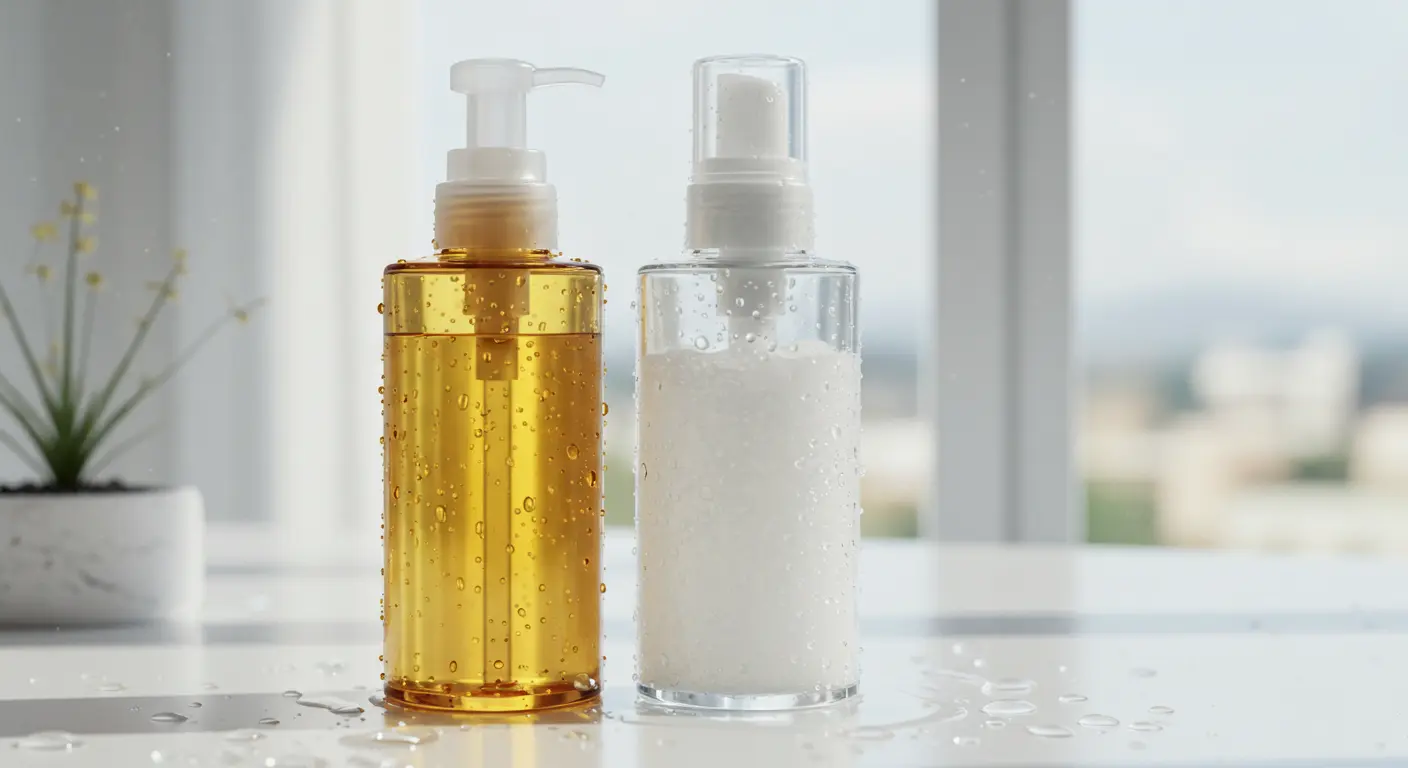
🧴 Step 1: Oil Cleanser
Clinical study results (Seoul National University, 2020)
Compared to the group that skipped oil cleansing, researchers confirmed 99.2% removal of makeup residue and 23% less excess sebum production.
A common mistake I’ve seen
A patient from Germany refused oil cleansing, saying, “I’ll break out if I put oil on my face.” When she returned two weeks after finally trying it, she was surprised to find her acne had actually decreased. This is the “like dissolves like” principle: oil-based cleansers effectively dissolve sebum plugs because they share the same fat-soluble structure.
🌟 Recommended Ingredients & Products
- Sensitive skin: Squalane base (highly stable molecule)
- Oily skin: Jojoba Oil base (structure similar to natural sebum)
- Dry skin: Argan Oil base (rich in vitamin E)
🧽 Step 2: Foam Cleanser
Caution: Avoid Sodium Lauryl Sulfate (SLS)
According to a study by the Korean Ministry of Food and Drug Safety (2019), cleansers containing SLS were associated with a 34% increase in skin barrier damage. Choose amino acid surfactants instead—by 2026, most major K-beauty cleansers have already made this switch.
3. Korean Skincare Routine Science: Skin Preparation (Steps 3-5)
✨ Step 3: Exfoliator – 2-3 times per week
The Science of Exfoliation
- Alpha Hydroxy Acid (AHA): Water-soluble, exfoliates the epidermal surface (pH 3.0-4.0)
- Beta Hydroxy Acid (BHA): Oil-soluble, exfoliates inside pores (pH 3.0-4.0)
- Poly Hydroxy Acid (PHA): Larger molecule, gentle enough for sensitive skin (pH 4.0-5.0)
When exfoliation goes wrong
A patient from Japan developed skin problems after overusing acids because she believed she needed to “exfoliate every day to feel clean.” Exfoliation should stay at 2-3 times per week, and you should stop immediately if your skin becomes red or irritated. This lesson matters even more in 2026: with regenerative actives trending, the barrier-first philosophy means over-exfoliation undoes everything else in your routine.
💧 Step 4: Toner – pH Balancer
Clearing up misconceptions about toner
“Toners are bad for my skin because they contain alcohol,” a French patient told me. But a Korean hydrating toner is completely different from the astringent toners common in the West. Korean toners focus on hydration with ingredients like hyaluronic acid and ceramide.
Role of Toner (Korean vs Western)
| Category | Korean Toner | Western Toner | Key ingredients | Purpose of use |
|---|---|---|---|---|
| Hydrating Toner | ✅ Flagship products | ❌ Rare | Hyaluronic Acid, Ceramide | Hydration |
| Astringent Toner | ❌ Rare | ✅ Traditional | Alcohol, Witch Hazel | Minimizing pores |
| Exfoliating Toner | ✅ Growing in popularity | ✅ Common | AHA, BHA | Exfoliation |
⚡ Step 5: Essence – Active Ingredient Delivery
Essence vs Serum Differences (by Molecular Weight)
- Essence: Molecular weight 200-500 Da, fast penetration
- Serum: Molecular weight 500-1000 Da, deeper penetration
- Cream: Molecular weight 1000 Da or more, surface protection
Confusion over the concept of essence
“I don’t know what the difference is between an essence and a serum,” a Spanish patient told me. Essence is a concept unique to K-beauty—thicker than a toner but lighter than a serum. Its primary role is to improve the skin’s underlying condition. In 2026, this step is where fermented essences shine: Korean labs have refined fermentation science so that actives become more bioavailable and gentler on the barrier at the same time.
4. Intensive Treatment Phase (Steps 6-8) – Active Treatment
🎯 Step 6: Serum – Targeted Treatment
| Skin concern | Recommended ingredient | Concentration | When to use | Cautions |
|---|---|---|---|---|
| Pigmentation | Vitamin C (L-Ascorbic Acid) | 10-20% | Morning | Oxidizes easily (store away from light) |
| Anti-aging | Retinol | 0.25-1% | Evening | Sun protection required |
| Gentle anti-aging | Bakuchiol | 0.5-2% | Morning/evening | Milder retinol alternative for sensitive skin |
| Skin repair | PDRN (Polydeoxyribonucleotide) | Varies by formula | Morning/evening | Check the source (salmon-derived vs plant-derived) |
| Dehydration | Hyaluronic Acid | 1-2% | Morning/evening | Works best at 50%+ humidity |
| Acne | Niacinamide | 5-10% | Morning/evening | Use separately from Vitamin C |
2026 spotlight: PDRN and exosome serums—what the science actually says
PDRN is a DNA fragment derived from salmon, originally used in Korean dermatology clinics for wound healing and skin repair (the well-known Rejuran injectable). A peer-reviewed review on PubMed Central found that PDRN promotes cell migration, angiogenesis, and reduced inflammation in wound-healing studies, which is the science behind its skin-repair reputation. Cosmetic-grade PDRN serums are now everywhere in Korea—but remember, a topical serum is not a clinical injectable. Think of it as barrier support and recovery care, not a procedure in a bottle. Exosomes are nano-sized vesicles involved in cell-to-cell signaling; the topical research is still evolving, and formulation quality varies widely between brands. My clinical advice: these are reasonable additions at step 6 if your basics (cleansing, moisturizing, sunscreen) are already consistent—never a replacement for them. If you want a deeper breakdown of these ingredients, see our 2026 K-beauty ingredient trends guide. If you prefer vegan products, plant-derived PDRN and exosome alternatives began launching in 2026.
Ingredient combination failures
A patient in the United Kingdom developed red, irritated skin after using Vitamin C and Niacinamide at the same time—a reaction caused by their pH difference. I recommended using Vitamin C in the morning and Niacinamide in the evening, and the irritation resolved.
👁️ Step 7: Eye Cream – Special Care
Why the skin around the eyes is different (Dermatological Research, 2021)
- Thickness: about 1/3 of normal skin (0.5 mm)
- Fat layer: 60% thinner than normal skin
- Collagen density: 40% lower
- Blood vessel density: 2x higher (a cause of dark circles)
Precautions for using eye cream
Apply gently with your ring finger—rubbing too hard can damage the thin skin around the eyes. Do not apply on the eyelids, as the product can migrate into the tear ducts.
💊 Step 8: Spot Treatment – Focus on problem areas
Usage by concentration (beware of over-treatment)
- Salicylic Acid 0.5%: Safe for daily use
- Salicylic Acid 2%: 3-4 times per week
- Benzoyl Peroxide 2.5%: Use every other day
- Tea Tree Oil 5%: Can be used daily (dilution required)
Spot treatment overuse cases
A U.S. patient suffered a chemical burn after layering multiple spot treatments at once because she wanted to “get rid of it fast.” Use only one product at a time, watch how your skin reacts, and only then consider trying another.
5. Protect and finish (steps 9-10) – Protection & Sealing

🥛 Step 9: Moisturizer – Seal in moisture
Climate-specific moisturizer fails
A patient from Canada told me the gel moisturizer she was using back home “made her skin even drier.” The culprit was the humidity difference: in areas with humidity below 30%, you need occlusive ingredients to prevent moisture from evaporating out of the skin.
A guide to choosing a moisturizer by climate
- Humidity above 70% (Korean summer): Gel type – Hyaluronic acid as the main ingredient
- Humidity 50-70% (Korean spring/fall): Lotion type – Ceramide + humectant
- Humidity 30-50% (typical Western climate): Cream type – Emollient + occlusive
- Humidity below 30% (arid regions): Balm type – Petrolatum base
2026 trend: Cooling skincare for heat-stressed skin
With record heat waves becoming the global norm, cooling skincare is one of the fastest-growing K-beauty categories of 2026. Hydrogel masks, chilled toner pads, and cryo-inspired gel moisturizers help calm heat-stressed, reddened skin after sun exposure. In a Korean summer with temperatures above 35°C (95°F), I now recommend patients keep a hydrogel mask in the refrigerator—it’s the fastest way to bring down skin surface temperature after a day outdoors.
Moisturizer ingredient breakdown (dermatology basis)
| Ingredient class | How it works | Representative ingredients | Best environment | Texture |
|---|---|---|---|---|
| Humectant | Attracts moisture | Hyaluronic Acid, Glycerin | High humidity (50% or higher) | Gels, essences |
| Emollient | Retains moisture | Ceramide, Squalane | Medium humidity (30-70%) | Lotions, creams |
| Occlusive | Seals in moisture | Petrolatum, Shea Butter | Low humidity (30% or less) | Creams, balms |
☀️ Step 10: Sunscreen – the final layer of protection
Korean vs Global Sunscreen Differences
For a deeper dive into 2026’s biggest sunscreen trend, see our guide to microbiome sunscreen skincare.
| Category | Korea (K-Beauty) | United States/Europe | Pros and cons |
|---|---|---|---|
| Key ingredients | Advanced chemical + hybrid filters | Focus on physical filters | Korea: Excellent spreadability Western: Suitable for sensitive skin |
| SPF standard | SPF 50+ / PA++++ | SPF 30-50 / Broad Spectrum | Korea: Excellent UVA protection West: Practical everyday protection |
| Texture | Light essence/lotion | Thicker cream | Korea: Easy for daily reapplication West: Strong single-layer protection |
The science behind the sunscreen reapplication cycle
According to an FDA study (2019), even SPF 50 products showed a 23% reduction in protection after 2 hours. In particular, chemical filters degrade as they absorb ultraviolet light, so reapplication is essential. The FDA’s official sunscreen guidance recommends reapplying at least every two hours—and note that in June 2026 the FDA approved bemotrizinol, a new broad-spectrum filter, expanding the options available to consumers.
Sunscreen reapplication failures
An Australian patient thought “one application in the morning and I’m good to go for the rest of the day”—and suffered a severe sunburn. Reapply every 2 hours when outdoors. This is essential, and UVA protection matters even indoors near windows. With the intense heat waves of summer 2026, this advice has never been more important.
6. Customized routines for each skin type
🔍 How to correctly diagnose your skin type
Fitzpatrick Skin Type + Baumann Skin Type Combination Diagnosis
- Measuring oiliness: T-zone blotting paper test (30 minutes after cleansing)
- Measuring sensitivity: Patch testing (24-48 hours)
- Pigmentation tendency: Observe pigment changes after wound healing
- Wrinkle tendency: Family history + degree of photoaging
Skin type misdiagnosis cases
An Italian patient was convinced he had oily skin, but he actually had dehydrated oily skin. After the correct diagnosis, he changed his routine to focus on hydration and saw dramatic improvement within two weeks.
| Skin type | Key ingredients | Ingredients to avoid | Routine adjustments | Seasonal changes |
|---|---|---|---|---|
| Oily/Acne-prone | Niacinamide, Salicylic Acid, Tea Tree | Heavy oils, comedogenic ingredients | Exfoliate 3 times per week Lightweight moisturizer | Summer: Gel type Winter: Lotion type |
| Dry/Sensitive | Ceramide, Hyaluronic Acid, Centella | Alcohol, strong acids, fragrance | Exfoliate once a week Rich moisturizer | Summer: Lotion type Winter: Cream + oil |
| Combination | Retinol, Vitamin C, Peptides | Excess oil, strong acids | Focus care on the T-zone Different products by area | Summer: Zone-specific care Winter: Full-face hydration |
| Mature skin | Retinol, PDRN, Peptides, Antioxidants | Harsh scrubs, over-exfoliation | Nutrition-focused care Gentle exfoliation | Year-round cream type Layered serums |
⭐ 10 steps prioritized by skin type
Priorities for oily/acne-prone skin
- Essential 4 steps: Oil Cleanser → BHA Serum → Light Cream → Sunscreen
- Additional recommendations: Foam cleansing, Niacinamide essence
- Cautions: Avoid excessive exfoliation, choose oil-free products
Priorities for dry/sensitive skin
- Essential 4 steps: Gentle Cleansing → Hyaluronic Acid Serum → Rich Cream → Mild Sunscreen
- Additional recommendations: Hydrating toner, Ceramide essence, Eye cream
- Cautions: Avoid strong active ingredients, patch testing is essential
Precautions for different skin types
Combination skin: Watch for irritation at the boundaries when using different products on different areas
Mature skin: Increase retinol concentration gradually
Sensitive skin: 48-hour patch testing required when introducing any new product—including trending PDRN and exosome serums
7. How to apply K-beauty abroad in 2026
🌍 Consider regional environmental factors
Regional failures and solutions
- Europe (London): Toner residue caused by hard, calcium-rich water → Solved by rinsing with distilled water
- Western United States: Hyaluronic acid backfiring in an extremely dry climate → Switched to a glycerin base
- Southeast Asia: Product deterioration due to high temperature and humidity → Refrigerated storage + buying smaller sizes
Ingredient stability data by climate
| Ingredient | Optimal temperature | Optimal humidity | Environments to avoid | Storage |
|---|---|---|---|---|
| Vitamin C | 15-20°C | 40-60% | High temperatures, direct sunlight | Refrigerate, opaque containers |
| Retinol | 20-25°C | 50-70% | UV light, oxygen | Dark storage, airtight containers |
| Hyaluronic Acid | No restriction | 50% or higher | Extremely dry environments | Humidity control is essential |
| PDRN | 15-25°C | No restriction | High heat (protein degradation) | Cool storage, use within 6 months of opening |
| Niacinamide | No restriction | No restriction | Extremely acidic environments | Room temperature storage OK |
🛒 What to check when buying internationally
2026 update: Buying authentic K-beauty abroad is easier than ever
K-beauty has fully gone mainstream. Olive Young—Korea’s biggest beauty retailer—expanded into the U.S. market in 2026, and its Global Mall ships to most countries directly. Major Western retailers like Sephora and Ulta have also dramatically expanded their K-beauty shelves. For international readers, this means far less reason to risk unauthorized third-party sellers: buy from official channels first, and treat deep-discount listings from unknown sellers with suspicion.
Authenticity checklist
- Holographic stickers: Check for the Korea Cosmetics Association certification mark
- Ingredient labels: Compare the local-language label with the Korean original
- Manufacturing date: Products made within 6 months are recommended (especially Vitamin C serum)
- Vendor verification: Confirm the seller is an authorized importer or official brand retailer
Experiences with identifying fake products
A Dutch patient developed skin problems after buying a K-beauty product online that was “50% cheaper than the original.” When we compared it against the authentic product, the ingredient concentration was significantly lower, and it contained unlisted preservatives. Only purchase from authorized retailers—this warning applies doubly to trending PDRN and exosome products, which counterfeiters have targeted heavily since they went viral.
💰 A guide to prioritizing by budget
Ranking of essential investments (budget $100)
- Sunscreen ($25): The most important anti-aging step
- Cleansing ($20): Oil + foam cleanser set
- Moisturizer ($30): Climate-appropriate formulation
- 1 serum ($25): For your top skin concern
🥈 Intermediate expansion (budget $200)
- Add toner + essence ($40)
- Add eye cream ($35)
- Add exfoliator ($25)
- 2-3 seasonal serums ($60)
🥉 Advanced completion (budget $300+)
- Invest in a unified brand line
- Separate seasonal routines
- Try a regenerative serum (PDRN or exosome) for barrier support
- Regular product rotation
8. Frequently asked questions (FAQ)
Do I really need to do all 10 steps? It’s taking too much time.
The core four steps are enough. Cleanse (steps 1-2) → Serum (step 6) → Moisturizer (step 9) → Sunscreen (step 10). Add the rest based on your skin condition. In fact, 80% of our clinic patients found these four steps to be enough—and the “skinimalism” trend of 2026 confirms Korean consumers agree.
Is there really a difference between foreign and Korean brands?
Differences in ingredient concentrations and formulation techniques. Korean products are optimized for high humidity environments and have developed technologies that deliver high efficacy even in light textures. Delivering Niacinamide at 10% concentration without side effects remains a signature K-beauty strength, and Korean labs currently lead the world in fermentation and regenerative-ingredient formulation.
Are PDRN and exosome serums worth trying, or just hype?
Worth trying—with realistic expectations. PDRN has genuine clinical history in wound healing, and cosmetic serums can support barrier recovery and hydration. However, a topical product is not equivalent to an in-clinic Rejuran procedure, and topical exosome research is still evolving. Get your basics consistent first, then add one regenerative product at a time from an authorized retailer.
Can I use the 10-step routine during pregnancy?
Some ingredients should be avoided. Ingredients to avoid: Retinol, Salicylic Acid at 2% or higher, Hydroquinone. Safer ingredients: Vitamin C, Niacinamide, Hyaluronic Acid, Ceramide. Always consult with your obstetrician before using any product during pregnancy.
Should I have a different morning and evening routine?
Yes, they should be different.
Morning: Antioxidant-focused (Vitamin C, Niacinamide) + UV protection
Evening: Regeneration-focused (Retinol, PDRN, AHA/BHA) + intensive nourishment
This is a scientific approach aligned with the skin’s circadian rhythm.
What if K-beauty products don’t suit my skin?
A phased approach is important.
1. Patch testing: 48-hour test behind the ear or on the inner arm
2. Single-product testing: Add only one product at a time
3. Adjusting concentration: Dilute or use every other day
4. Find alternative ingredients: Identify the irritating ingredient and replace it
Why did it work in Korea but not in my home country?
Environmental differences are the biggest culprit. Humidity, UV intensity, water quality, and air pollution levels all vary by region. In areas with humidity below 50%, ceramide or squalane products may work better than hyaluronic acid.
🌞 Wondering how to keep your summer makeup flawless?
“The Complete Guide to Summer Makeup in 5 Steps”
reveals the K-beauty secrets to 8-hour staying power in a 35°C heat wave!
💭 Final advice from a dermatologist
After more than six years of treating thousands of international patients, I’ve learned that the key to K-beauty is not the “steps” but the scientific understanding behind them. It’s not about slapping on 10 products—or chasing every viral ingredient like PDRN—it’s about understanding why each ingredient is used in that order and adjusting it to your skin and environment. That’s true K-beauty in 2026.
Your skin may be different from mine, and the environment you live in may be different. But the science is the same. Use this guide to create your own perfect routine.
What matters is consistency. Four to six steps you can do consistently will yield better results than 10 steps done perfectly for a week and then abandoned. And remember—depending on your individual skin condition, consulting a dermatologist is always the safest and most effective option.