Key Takeaway: By mid-2026, the K-beauty ingredient revolution is no longer a prediction—it’s reality. With Korean cosmetics exports hitting a record $7 billion in the first half of 2026 alone (up 27.3% year-over-year), PDRN, exosomes, and peptides have cemented their place as the defining ingredients of the year. The medicosmetics movement—clinical-grade skincare for everyday use—is now the global standard, confirmed at Cosmobeauty Seoul 2026 where PDRN was crowned the breakout ingredient of the year.
1. Why K-Beauty Is Now All About Ingredients
The 2026 K-beauty ingredient trends have transformed from industry forecasts into a full-blown global movement. In 2025, Korean cosmetics exports shattered records at $11.4 billion—a 12.3% increase that made South Korea the world’s second-largest cosmetics exporter, surpassing the United States and trailing only France. But the momentum hasn’t slowed: first-half 2026 exports have already reached a provisional $7 billion, up 27.3% year-over-year, marking the strongest January-to-June performance the industry has ever recorded.
How Global Consumers Changed the Game
Today’s skincare enthusiasts check ingredient lists before brand names. According to Hwahae, Korea’s leading beauty review app, searches for specific ingredients like PDRN, niacinamide, and ceramide now dominate user queries. This rise in “ingredient literacy” is particularly strong among Gen Z and Millennial consumers who actively research which active ingredients address their specific skin concerns—much like how Western consumers approach supplements and nutrition labels. At Cosmobeauty Seoul 2026, held in May at COEX with over 530 exhibitors and 4,700 beauty brands, skincare accounted for 60% of all product submissions—confirming that ingredients, not marketing gimmicks, drive the industry.
The Rise of Clinical-Grade Skincare
What sets K-beauty apart is its data-driven credibility. According to Trendier AI analysis presented at BeautyMatter’s landmark webinar (the platform’s largest ever, with over 1,000 participants), K-beauty products earn consumer loyalty through clinically-proven efficacy, not viral marketing alone. The defining shift of 2026? Medical-grade ingredients once exclusive to dermatology clinics are now standard in everyday skincare products—a trend called “medicosmetics” that has fully reshaped the industry. As one industry analyst noted at Cosmobeauty Seoul, K-beauty in 2026 isn’t just selling products; it’s exporting an entire beauty philosophy built on science.

2. The 7 Most Powerful K-Beauty Ingredients for 2026
Validated by Cosmobeauty Seoul 2026’s trend report and forecasts from BeautyMatter and Cosmorning, these seven ingredients represent the cutting edge of K-beauty innovation. Each has been validated in medical settings before making the leap to consumer skincare—the hallmark of the medicosmetics movement that dominated the show floor this May.
1) PDRN (Polydeoxyribonucleotide)
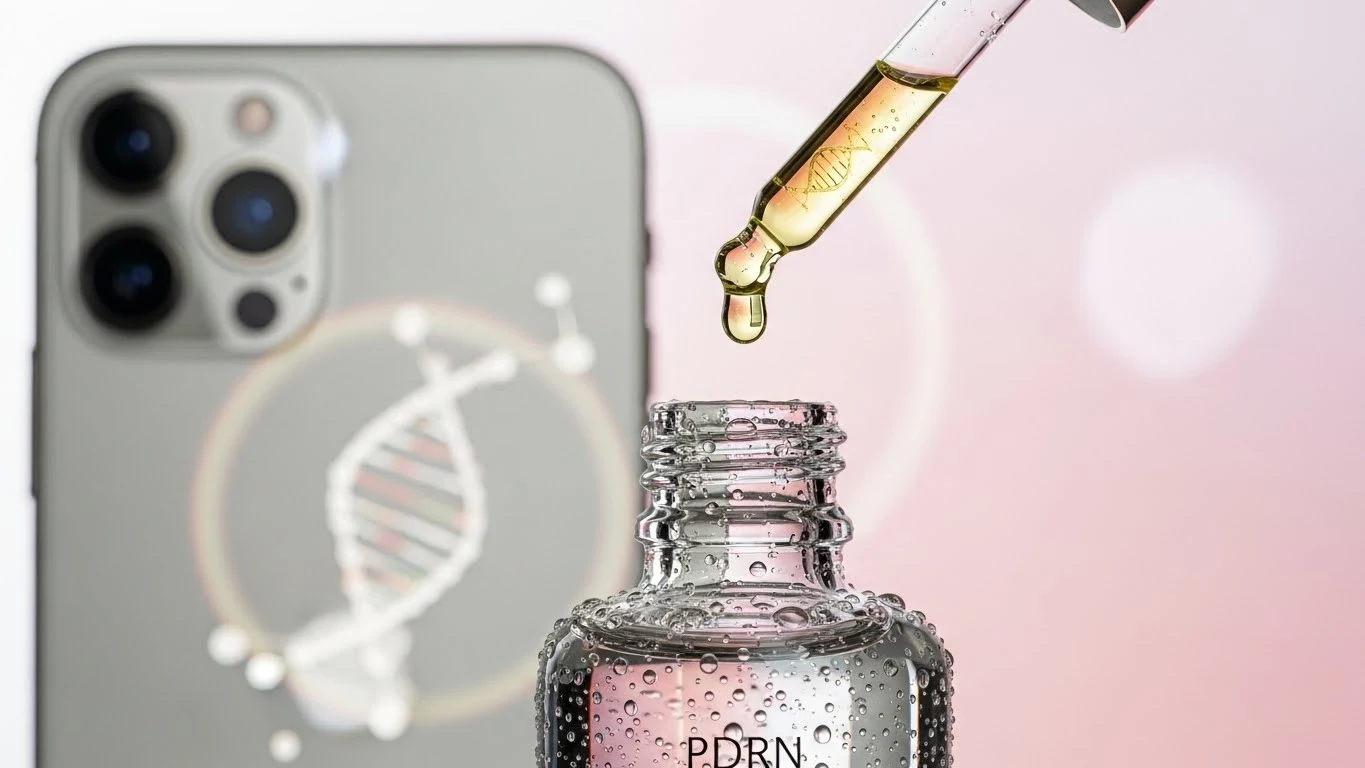
PDRN was officially crowned the breakout ingredient of the year at Cosmobeauty Seoul 2026. Extracted from salmon or trout DNA, PDRN was originally the key component in Rejuran Healer treatments at Korean dermatology clinics and is now widely available in serums and creams for home use. Think of it as a gentler alternative to retinol—it promotes skin regeneration without the irritation. Clinical studies show PDRN increases dermal density by 8.67% and skin brightness by 4.88% within 28 days. Notably, an increasing number of younger Korean brands are now formulating with plant-based (vegan) PDRN—derived from green tea, ginseng, or rice—an approach gaining particular traction among Gen Z consumers. Brands like Innisfree (green tea PDRN), VT Cosmetics (mountain ginseng PDRN), and Equalberry (rice PDRN) are leading this clean-meets-clinical movement. At Cosmobeauty Seoul, Farmstay’s new exosome-boosted ginseng PDRN Capsule Serum was among the standout launches.
Key Benefits: Stimulates collagen production, accelerates skin regeneration, reduces inflammation, minimizes fine lines, strengthens the skin barrier
2) Exosomes
These nano-sized cellular messengers are revolutionizing how skincare ingredients work. According to Hwahae data, products containing exosomes increased 5.8 times in 2025 compared to the previous year, and the trend has only accelerated into 2026. Exosomes don’t just deliver benefits themselves—they help other ingredients penetrate deeper and work more effectively. For anyone dealing with aging, loss of elasticity, or skin damage, exosomes represent the next frontier in high-performance minimalist skincare. Vogue has identified PDRN and exosomes together as the dominant K-beauty trend of 2026, noting these ingredients have now fully transitioned from clinical to consumer formats. At Cosmobeauty Seoul 2026, exosome-based pore-tightening products were among the most heavily featured innovations, often combined with natural ingredients like milk, phyto-extracts, cica, and red ginseng.
Key Benefits: Accelerates skin regeneration, improves elasticity, tightens pores, enhances ingredient delivery
3) Peptide Complex
Peptides—chains of amino acids—have long been celebrated for their collagen-boosting abilities. But the next-generation biotech peptides dominating 2026 work with unprecedented precision at the cellular level. Instead of single-peptide formulas, brands now feature multi-peptide complexes designed to support the look of firmness, elasticity, and smoother skin texture simultaneously. The trend has even expanded beyond skincare into K-haircare, with COSRX’s Peptide-132 Ultra Perfect Hair Bonding line gaining popularity on Amazon and Qoo10 Japan among consumers seeking the coveted “glass hair” look popularized by K-drama actresses.
Key Benefits: Promotes collagen synthesis, improves skin firmness, reduces wrinkles, increases skin density
4) Tranexamic Acid
Originally developed as a blood-clotting medication, tranexamic acid has proven remarkably effective for brightening and reducing hyperpigmentation. Unlike hydroquinone, it’s gentle enough for sensitive skin—making it a favorite in K-pharmacy brands sold at Olive Young. For anyone dealing with melasma, post-inflammatory hyperpigmentation, or uneven skin tone, tranexamic acid offers results without the harsh side effects. The ingredient continues to be flagged by Trendier AI as one of the top rising medical-grade actives in the global market.
Key Benefits: Fades hyperpigmentation, brightens skin, reduces melasma and dark spots, evens skin tone
5) Dexpanthenol
The active form of panthenol (vitamin B5), dexpanthenol excels at wound healing and skin regeneration. It has become an essential ingredient in derma-cosmetics for sensitive skin, functioning as a barrier repair specialist. As consumers increasingly report “vinyl skin” and acute sensitivity—conditions worsened by environmental stressors—dexpanthenol has emerged as the go-to ingredient for barrier management. If you’ve ever used La Roche-Posay Cicaplast, you’re familiar with this ingredient—but K-beauty brands are now incorporating it into sophisticated formulations that go far beyond basic healing.
Key Benefits: Strengthens skin barrier, provides deep hydration, soothes irritation, promotes wound recovery
6) Skin Microbiome Probiotics
Your skin hosts trillions of microorganisms that form a protective ecosystem. Microbiome-focused products restore this delicate balance using combinations of postbiotics, prebiotics, and bio-engineered probiotics. Beauty of Joseon’s Probiotic Sunscreen exemplifies how Korean brands are leading this category—protecting skin from UV damage while nurturing its natural defenses. The broader microbiome beauty category continues to evolve in 2026, with Korean labs pioneering fermentation technology and precision-fermented ingredients that build on decades of innovation dating back to the original fermented essence movement.
Key Benefits: Restores skin balance, strengthens barrier function, calms irritation, boosts skin immunity
7) Vegan Ceramide
Plant-derived ceramides replicate the essential lipids that hold your skin barrier together. They’re the answer for consumers who want both sustainability and efficacy—a combination that defines the clean beauty movement in 2026. At Cosmobeauty Seoul, natural, organic, and vegan products accounted for 24% of all exhibitor submissions, making it the second-largest category after skincare overall. As environmental consciousness grows, vegan ceramides are becoming the gold standard for barrier repair products, often paired with snow mushroom (Tremella fuciformis)—the rising “vegan hyaluronic acid” that holds up to 500 times its weight in water.
Key Benefits: Restores skin barrier, prevents moisture loss, relieves dryness, protects skin
3. Ingredient Effectiveness Comparison
To help you choose the right ingredients for your skin concerns, here’s how the seven powerhouse K-beauty ingredients compare across four key benefit categories: anti-aging, barrier strengthening, hydration, and brightening.
1. PDRN: Anti-aging ★★★★★ / Barrier ★★★★☆ / Hydration ★★★☆☆ / Brightening ★★★☆☆
2. Exosomes: Anti-aging ★★★★★ / Barrier ★★★★☆ / Hydration ★★★☆☆ / Brightening ★★☆☆☆
3. Peptides: Anti-aging ★★★★★ / Barrier ★★★☆☆ / Hydration ★★★☆☆ / Brightening ★★☆☆☆
4. Tranexamic Acid: Anti-aging ★★★☆☆ / Barrier ★★☆☆☆ / Hydration ★★☆☆☆ / Brightening ★★★★★
5. Dexpanthenol: Anti-aging ★★★☆☆ / Barrier ★★★★★ / Hydration ★★★★☆ / Brightening ★★☆☆☆
6. Microbiome: Anti-aging ★★★☆☆ / Barrier ★★★★★ / Hydration ★★★★☆ / Brightening ★★☆☆☆
7. Vegan Ceramide: Anti-aging ★★★☆☆ / Barrier ★★★★★ / Hydration ★★★★★ / Brightening ★★☆☆☆
4. 2026 K-Beauty Ingredient Trends in the Global Market
K-beauty has evolved beyond product exports—it’s now exporting an entire beauty culture. On TikTok, the hashtag “Glow up in Korea” continues to fuel before-and-after transformation content from visitors to Seoul, while the meme “K-Beauty is living in 2050” has become a viral shorthand for the industry’s innovation edge. The numbers tell an even more compelling story: the global K-beauty market now exceeds $15.4 billion in valuation, and South Korea’s cosmetics trade surplus topped $10 billion for the first time in history in 2025.
2025 Full-Year Export Milestones
1. South Korea overtook the United States to become the world’s second-largest cosmetics exporter in 2025, with $11.4 billion in exports versus the U.S.’s $10.8 billion. Only France ($24.3 billion) ranks higher.
2. United States: Became Korea’s largest export destination at $2.2 billion, up 15% year-over-year, surpassing China for the first time.
3. China: Dropped to $2 billion with a 19% decline, reflecting K-beauty’s strategic diversification away from Chinese market dependency.
4. Japan: Maintained strong growth at $1.1 billion, with Korean cosmetics holding the top import position for three consecutive years.
5. Market expansion: Korean cosmetics reached 202 countries in 2025, up from 172 in 2024. Poland surged 115% and the UAE rose 70.6%, both entering the top 10.
2026 First Half: The Boom Accelerates
1. Record-breaking H1 exports: Korean cosmetics exports hit a provisional $7 billion in the first half of 2026, up 27.3% year-over-year—the largest first-half performance ever recorded.
2. U.S. market dominance: The United States imported approximately $1.45 billion in Korean cosmetics in H1 2026, accounting for 20.7% of total exports and growing 41.5% year-over-year. During Amazon Prime Day in June 2026, Korean brands accounted for roughly 40% of the 100 best-selling skincare products, with Medicube topping search rankings across all Amazon categories.
3. China continues to decline: Exports to China fell to approximately $1.01 billion in H1, a 6.6% decrease that dropped its share from 19.6% to 14.4%.
4. UK emerges as a growth engine: Exports to the United Kingdom surged 130% to $195 million in the first half, establishing Europe as a major new growth frontier.
5. Government backs K-beauty: South Korea’s Finance Minister officially designated the cosmetics industry as a strategic export growth engine in Q1 2026, recognizing K-beauty as “a future strategic industry combining AI, data, and devices.”
Key Trends Shaping the Second Half of 2026
1. At-home devices go mainstream: Home skincare devices like the Medicube AGE-R Booster Pro continue dominating Amazon bestseller lists globally, getting a boost when Kylie Jenner was photographed using the device at a brand pop-up.
2. Cooling care expands: Climate change is driving demand for products that address heat-induced skin stress. “Cooling” and “skin heat relief” products surged in Olive Young Global Mall’s Q2 rankings.
3. K-haircare takes off: The “glass hair” trend is fueling global interest in scalp care and hair loss prevention products, with brands like VT Cosmetics and COSRX leveraging skincare ingredients like cica, PDRN, and peptides in haircare lines.
4. The end of 10-step routines: High-efficacy multi-functional products are simplifying skincare regimens into what Korean beauty insiders call “skip-care.”
5. Clean meets clinical: Vegan PDRN and plant-based exosomes represent the fusion of sustainability and science—confirmed as a dominant theme at Cosmobeauty Seoul 2026.

5. Frequently Asked Questions (FAQ)
Q1. What’s the difference between PDRN and exosomes?
A1. PDRN is a DNA fragment extracted from salmon that stimulates collagen production and skin regeneration by activating adenosine A2A receptors. Exosomes are cellular messenger particles that enhance how other ingredients are absorbed and accelerate skin recovery through cell-to-cell communication. Both are excellent for anti-aging, but they work through different mechanisms—PDRN rebuilds while exosomes optimize delivery. Many 2026 K-beauty products now combine both ingredients for synergistic effects.
Q2. Can sensitive skin use medicosmetic ingredients?
A2. Yes, several of these ingredients are actually ideal for sensitive skin. Dexpanthenol, microbiome probiotics, and vegan ceramide are particularly gentle and focus on barrier repair. PDRN and peptides are also relatively non-irritating, though patch testing is always recommended when trying new actives.
Q3. Which 2026 K-beauty ingredient should I focus on?
A3. PDRN is the standout ingredient of the year—crowned the breakout ingredient at Cosmobeauty Seoul 2026 and identified by Vogue as the dominant K-beauty trend alongside exosomes. The broader medicosmetics movement, where medical-grade ingredients enter mainstream skincare, is the key theme shaping the industry. For beginners, PDRN serums offer an approachable entry point with clinically-backed results.
Q4. Why are K-beauty ingredients so popular globally?
A4. K-beauty combines clinical efficacy with accessible pricing and innovative formulations. Products often go viral on TikTok, then earn lasting consumer trust through real results—what Trendier AI calls “data-backed credibility behind the hype.” This cycle of social proof followed by proven performance is uniquely powerful. The numbers confirm it: Korean cosmetics exports hit $7 billion in just the first half of 2026, with the U.S. alone importing $1.45 billion.
Q5. Is vegan PDRN as effective as traditional PDRN?
A5. Vegan PDRN derived from green tea, ginseng, or rice offers regenerative benefits similar to salmon-derived PDRN, and interest in plant-based alternatives is accelerating rapidly—especially among Gen Z consumers. At Cosmobeauty Seoul 2026, vegan PDRN formulations were among the most-featured innovations from younger Korean brands. However, efficacy can vary depending on concentration and formulation methods. Always check for clinical data on specific products rather than assuming all vegan alternatives perform identically.
Q6. What’s new in K-beauty ingredients since late 2025?
A6. Several developments have reshaped the landscape. Snow mushroom (Tremella fuciformis) has emerged as the “vegan hyaluronic acid” of 2026, holding up to 500 times its weight in water. Combination products pairing PDRN with vitamin C have launched (like SeoulCeuticals’ dual-pathway serum). Microneedle patches and spicule-based delivery systems have gone fully mainstream. And the cooling care category has expanded rapidly in response to rising global temperatures, with cooling sunscreens and mists surging in demand.
6. Related Reading
1. PDRN Skincare and Snail Mucin: The 2025 K-Beauty Revolution
2. Natural Beauty Treatments: Why the World Chooses Korea for Medical Tourism
3. 2026 Korean Drama Lineup: Complete Netflix and Disney+ Preview
4. Korean Banchan Culture: Why Koreans Share Everything at the Table
7. References
1) BeautyMatter – 2026 K-Beauty Forecast: Top 7 Data-Backed Trends
https://beautymatter.com/articles/2026-k-beauty-forecast-top-7-data-backed-trends
2) Korea Herald – K-beauty exports cross $11B milestone in 2025
https://www.koreaherald.com/article/10652928
3) Business Korea – K-Beauty Posts Record First-Half Exports (July 2026)
https://www.businesskorea.co.kr/news/articleView.html?idxno=273280
4) Premium Beauty News – K-beauty: Top 10 Innovative Launches at Cosmobeauty Seoul 2026
https://www.premiumbeautynews.com/en/k-beauty-top-10-innovative,27719
5) Cosmorning – 2026 K-Beauty Global Strategy: 7 Key Trends
https://www.cosmorning.com/news/article.html?no=51235
6) IBTimes – South Korea Tops U.S. in Cosmetics Exports with Record $11.4B in 2025
https://www.ibtimes.com/south-korea-tops-us-cosmetics-exports-record-114-billion-2025-3803255
7) THE K BEAUTY SCIENCE – K-Beauty Still Means Skincare: Cosmobeauty Seoul 2026 Trend Report
https://en.thekbs.co.kr/news/articleView.html?idxno=16154
8) Personal Care Insights – South Korea Government Backs K-Beauty as Export Priority
https://www.personalcareinsights.com/news/south-korea-beauty-export.html
📺 Watch More
YouTube: K-Beauty 2026 Trends – Global Beauty Expert Analysis
Watch K-Beauty 2026 Trend Videos on YouTube
TikTok: #KbeautyTrends #PDRN #Exosome
Explore K-Beauty Ingredient Trends on TikTok