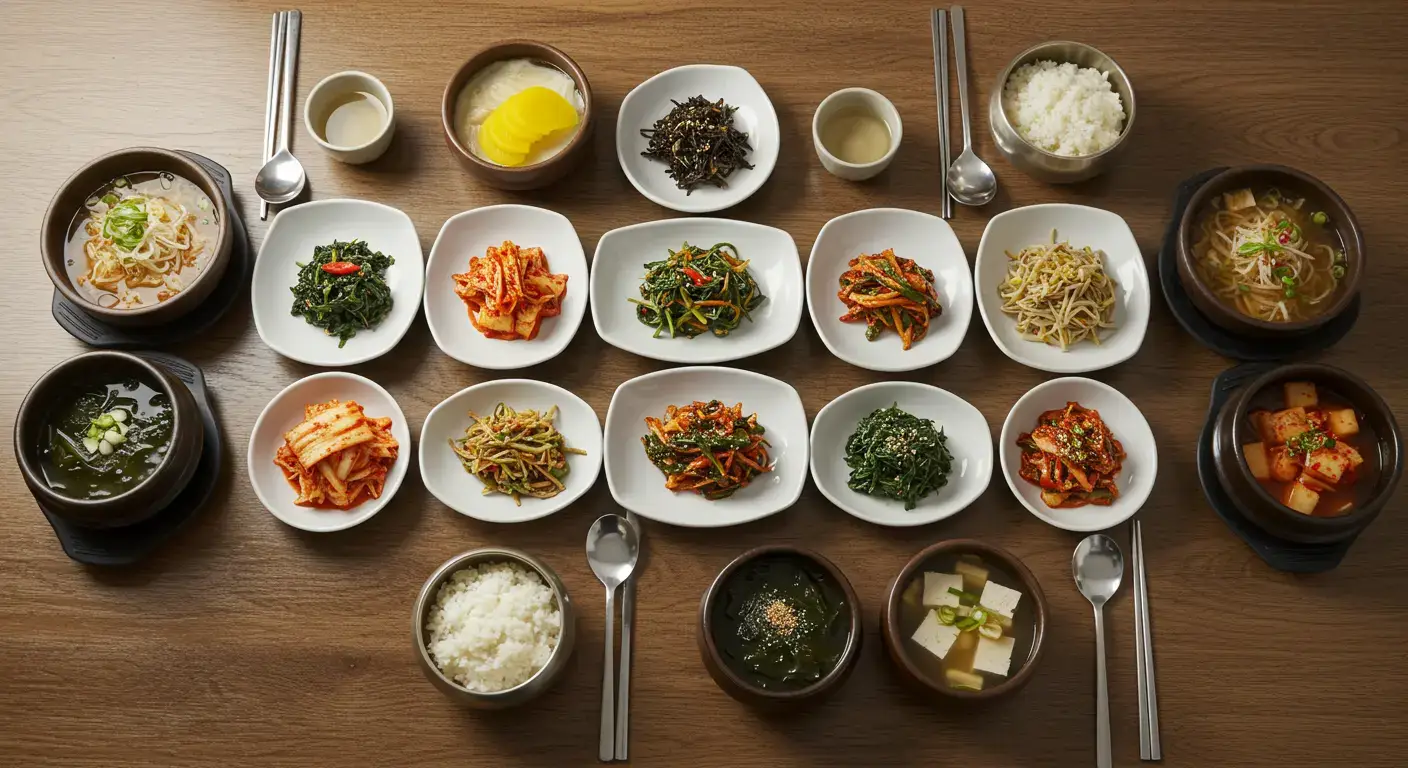
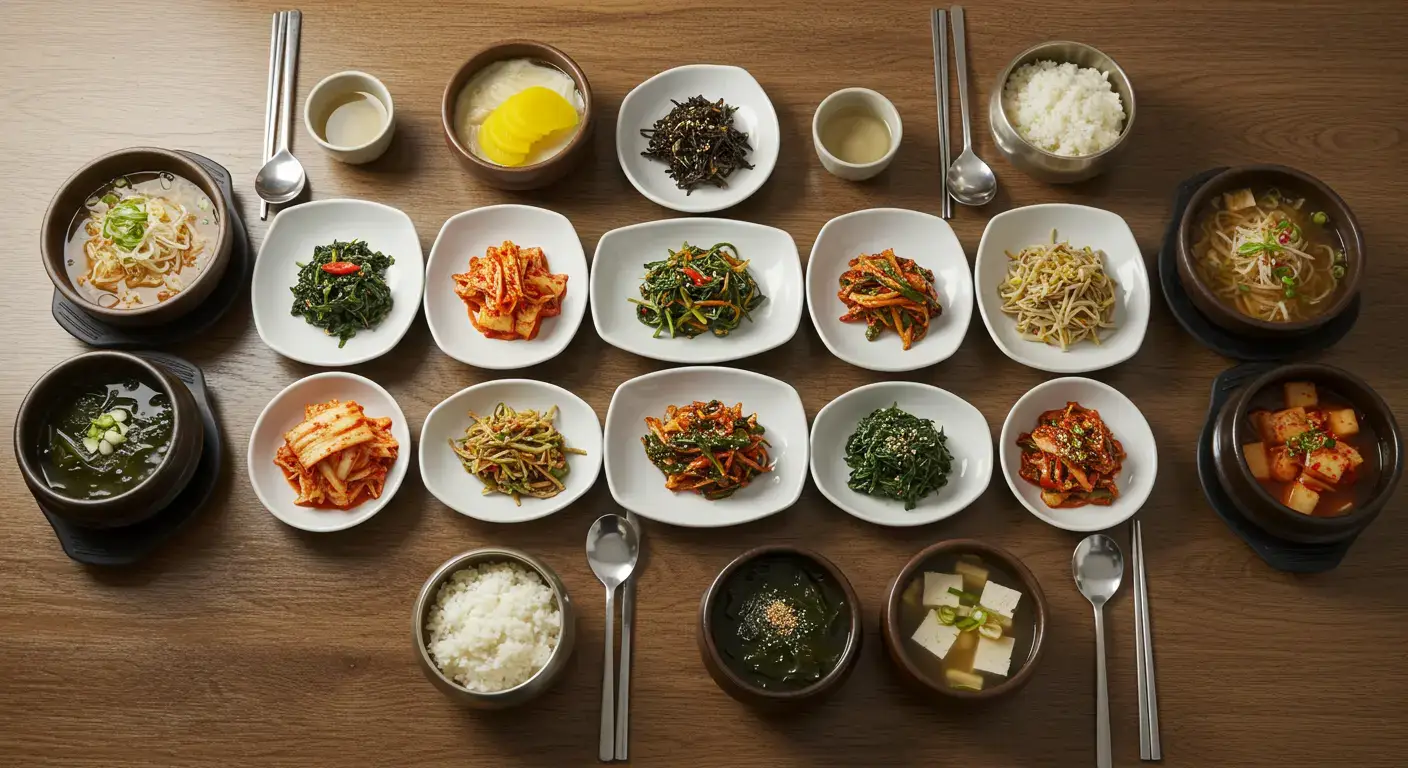
The first time my French friend Marie walked into a Korean restaurant, a dozen little dishes landed on our table before we had even ordered. “Wait, did they bring our food already?” she asked. When I explained that these were just banchan (반찬, the side dishes served with every Korean meal), she looked even more confused.
“So which one is the main course?” she asked. I shrugged and said, “Honestly? All of it.” Raised on the Western rhythm of appetizer, main, and dessert, Marie couldn’t believe that everything was meant to be eaten together, at the same time, from shared plates.
If you’ve ever had that same moment of surprise, you’re in good company. Korean banchan culture puzzles almost every first-time visitor, and “that’s just how we do it” isn’t a very satisfying answer.
The truth is that those small dishes carry centuries of thinking about color, community, preservation, and fairness. Each plate on a Korean table is a piece of inherited wisdom. Once you know the story behind it, every meal tastes a little different.
Originally published August 14, 2025 · Updated October 13, 2026 with new export data, 2026 dining trends, and a first-timer etiquette guide.
Table of Contents
- What Is Banchan? Meaning and Main Types
- 7 Philosophies Behind Korean Banchan Culture
- Harmony in diversity: the five colors
- A culture of sharing built on jeong
- The Joseon royal table
- Smart preservation through fermentation
- Visual harmony and table aesthetics
- Equality at the table
- Balance through variety
- Korean vs. Western Dining Styles
- Korean Banchan Culture in 2026: What’s New
- Banchan Etiquette: 6 Tips for First-Timers
- Why Banchan Still Matter Today
- Korean Banchan Culture FAQ
1. What Is Banchan? Meaning and Main Types
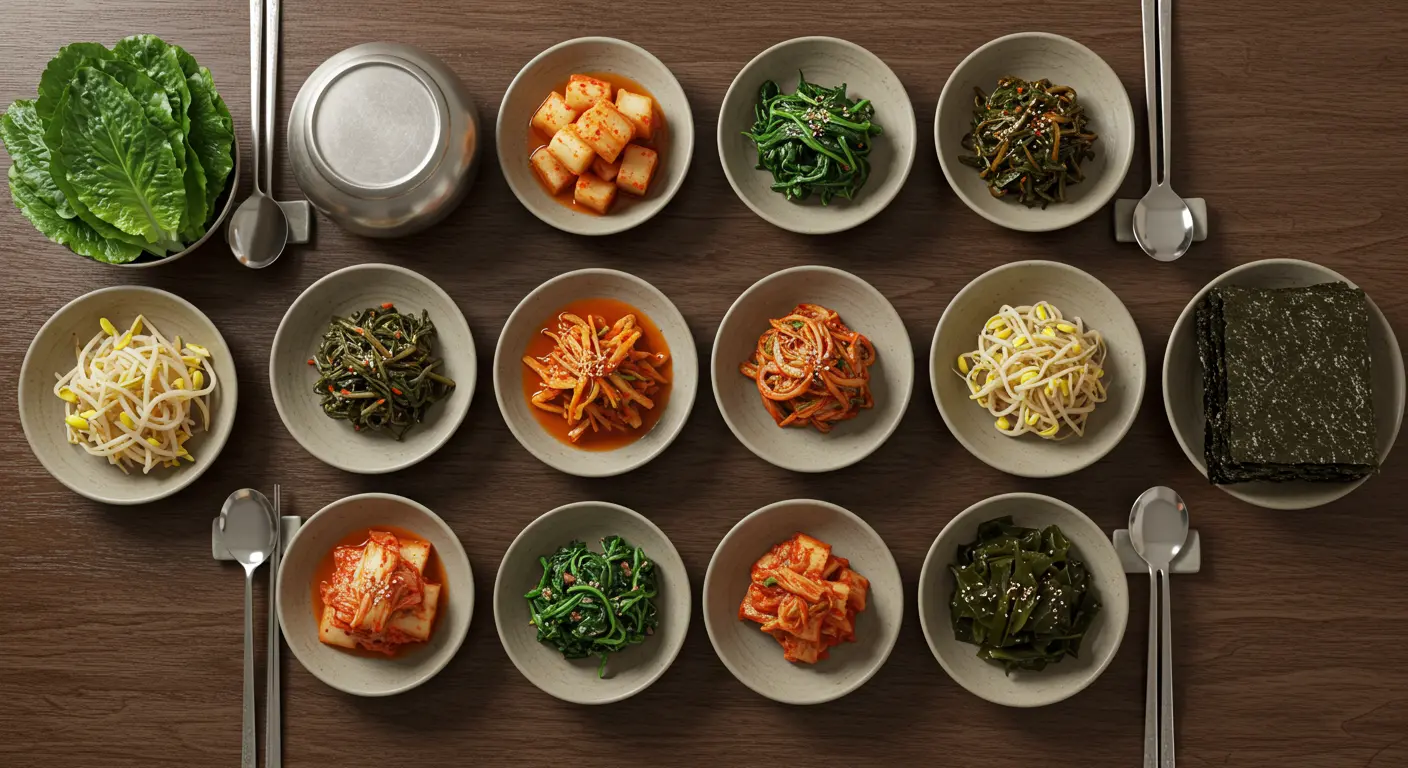
The word banchan (飯饌) combines the Chinese characters for “rice” and “food served with it,” so a literal translation is simply “dishes that go with rice.” In Korean banchan culture, though, these dishes are far more than an afterthought. In a Korean home, rice, soup, and banchan together make a complete meal, and no single plate is the star.
-. Kimchi: napa cabbage kimchi (baechu-kimchi), cubed radish kimchi (kkakdugi), ponytail radish kimchi (chonggak-kimchi)
-. Namul (seasoned vegetables): spinach (sigeumchi-namul), soybean sprouts (kongnamul), bellflower root (doraji)
-. Jorim & bokkeum (braised and stir-fried): stir-fried anchovies (myeolchi-bokkeum), soy-braised tofu (dubu-jorim), braised lotus root (yeongeun-jorim)
-. Jeotgal (salted fermented seafood): pollock roe (myeongnan-jeot), squid (ojingeo-jeot)
-. Gui & jeon (grilled and pan-fried): roasted seaweed (gim-gui), rolled omelet (gyeran-mari), savory pancakes (jeon)
Kimchi is the undisputed king of the table, and most Korean households rarely sit down to a meal without it. If you’d like to make your own, our guide to fermenting kimchi without a kimchi fridge shows 15 ways to do it anywhere in the world.
2. 7 Philosophies Behind Korean Banchan Culture
First: Harmony in Diversity — Obangsaek, the Five Colors
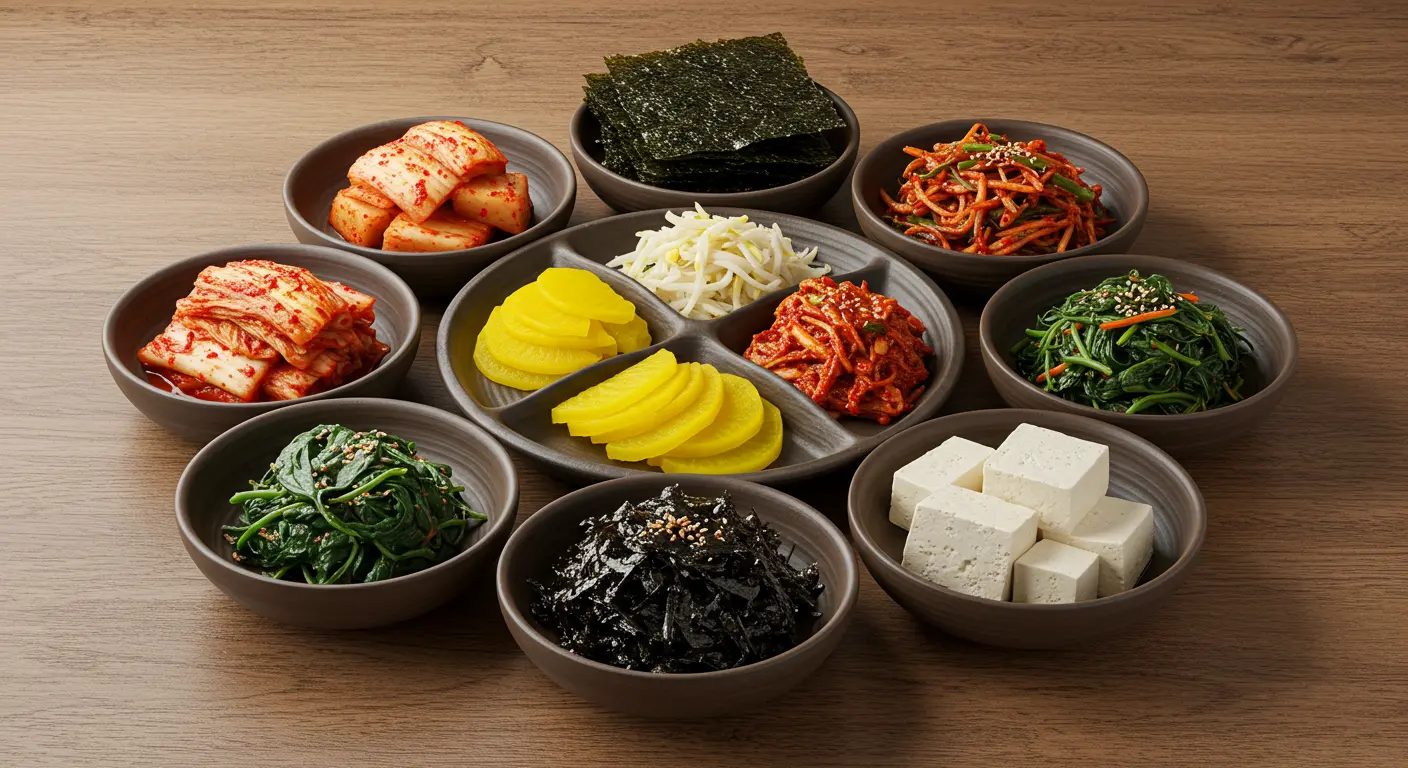
In Korean banchan culture, a well-set table usually shows obangsaek (오방색), the five traditional colors: red kimchi, white radish, black seaweed, yellow egg, and green spinach. This palette comes from the East Asian theory of yin-yang and the Five Elements (eumyang-ohaeng), which links each color to an element and a direction.
| Color | Typical Banchan | Element & Symbolism |
|---|---|---|
| Red | Kimchi, gochujang dishes | Fire · South · Heart |
| White | Radish, bellflower root | Metal · West · Lungs |
| Black | Seaweed, black beans | Water · North · Kidneys |
| Yellow | Egg, pumpkin | Earth · Center · Spleen |
| Green | Spinach, cucumber | Wood · East · Liver |
These organ links come from traditional philosophy, not modern medicine. Think of them as cultural symbolism, much like the four humors in old European thought.
Second: A Culture of Sharing Built on Jeong
In the West, your plate is your territory. In Korean banchan culture, the dishes belong to everyone, and people reach into the same dishes throughout the meal. Koreans often say food simply tastes better together.
This habit reflects jeong (정), a hard-to-translate word for the warm, lasting bond that grows between people who spend time together. Eating from shared dishes instead of individual plates expresses a “we before me” mindset that still shapes Korean social life.
Third: Historical Heritage — The Joseon Royal Table
Korean banchan culture also has royal roots. During the Joseon Dynasty (1392–1897), the number of banchan signaled status. Tables were counted in cheop (첩), the side dishes served beyond basics such as rice, soup, kimchi, and sauces. Commoners usually ate a 3- or 5-cheop meal, aristocratic homes could serve up to 9, and only the king’s surasang (수라상, royal table) featured 12.
Today’s lavish hanjeongsik (한정식, Korean full-course table) restaurants still echo that tradition. See how one K-drama brought it to the screen in our Hotel Del Luna Korean table setting recipes.
Fourth: Smart Preservation Through Fermentation
Kimchi, jeotgal, and jangajji (pickled vegetables) aren’t staples of Korean banchan culture by accident. Long before refrigerators, Koreans relied on salt and fermentation to keep vegetables and seafood through long, harsh winters.
The communal autumn ritual of making winter kimchi, known as kimjang, was inscribed on UNESCO’s Intangible Cultural Heritage list in 2013. Korea’s tradition of making jang, the fermented soybean pastes and sauces behind doenjang and gochujang, followed in 2024.
That fermented backbone runs through everyday cooking, too. You can taste it in comforting dishes like soybean-paste stew and bean sprout soup, both featured in our guide to Korean hangover soups.
Fifth: Visual Harmony and Table Aesthetics
A Korean table is meant to look as good as it tastes, almost like a work of art. Bowls of different sizes and heights are arranged so colors and textures sit side by side, much like a still-life painting. Hosts also place dishes so every diner can reach them easily.
Sixth: Equality at the Table
A Western course meal follows a strict order, and each course has its rank. In Korean banchan culture, by contrast, every dish holds an equal place on the table. Humble stir-fried anchovies sit right next to braised beef, and every diner builds their own combination, bite by bite.
Seventh: Balance Through Variety
Because you eat a little of many dishes, Korean banchan culture naturally creates variety. A typical spread mixes grains, vegetables, soy, seafood, and eggs, with plenty of plant-based dishes. Koreans simply grow up expecting a meal to include many flavors, colors, and textures at once.
3. Korean vs. Western Dining Styles
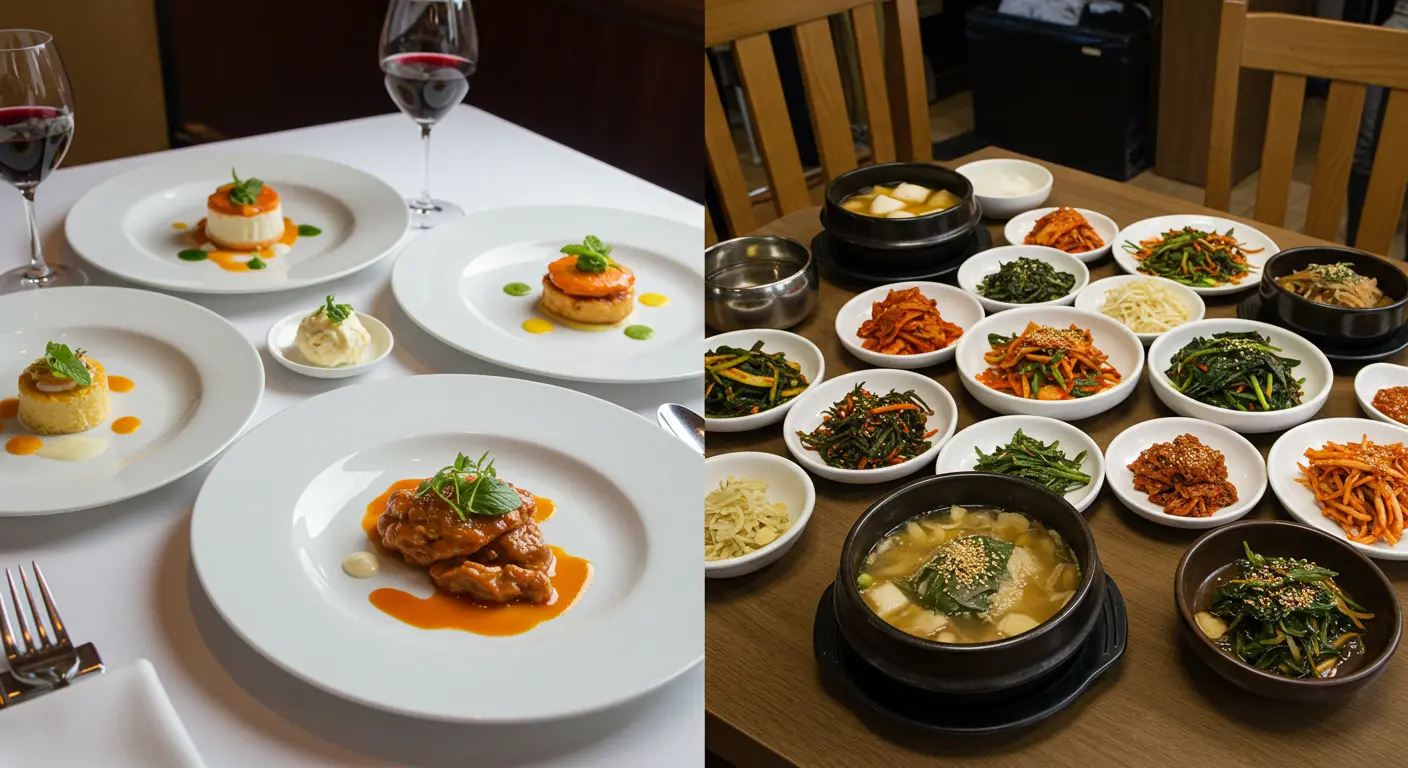
Korean Hansang vs. Western Course Meal
| Aspect | Western Course | Korean Hansang |
|---|---|---|
| Order | Appetizer → main → dessert | Everything at once |
| Plates | Individual plates | Shared dishes |
| Values | Personal choice, sequence | Community, harmony, balance |
| Pace | Often 1–2 hours | Often 30 minutes or less |
These differences go deeper than habit. They reflect different cultural values: Western dining celebrates personal choice and a carefully paced sequence, while Korean banchan culture celebrates the group and the balance of the whole table.
That communal, flavor-packed approach is part of why Korean food travels so well. The worldwide craze for fiery instant noodles is a good example; read how Buldak ramen helped push Korean ramyeon exports to new records.
4. Korean Banchan Culture in 2026: What’s New
Banchan used to be the quiet supporting cast of Korean cuisine. In 2026, they’re stepping into the spotlight. Here are the biggest shifts shaping Korean banchan culture at home and around the world.
Banchan Are Becoming Global Stars
According to the Korean Food Promotion Institute’s Hansik magazine report on banchan going global, international attention is shifting from main dishes like bulgogi toward the side dishes seen in K-dramas. The April 2026 report notes that kimchi exports hit a record $164 million in 2025. It also highlights spicy cucumber salad (oi-muchim) going viral online and overseas restaurants serving namul as a stand-alone dish.
K-Food Exports Hit Record Highs
Banchan are riding a much bigger wave. The Korea Herald reported that Korea’s K-Food+ exports climbed to a record $13.62 billion in 2025, and ramyeon became the first single food item to top $1.5 billion. The US was the largest market at $1.8 billion, and the government has set a $16 billion target for 2026.
Hit content keeps fueling curiosity. After Netflix’s KPop Demon Hunters, gimbap purchases by foreign customers at CU convenience stores jumped 231% in July and August 2025. Then Culinary Class Wars Season 2 topped Netflix’s global non-English TV chart in December. For the snack side of the boom, see our Korean snacks global trend report.
Smaller Households, Smaller Banchan
Korean banchan culture is also adapting at home. The 2025 census counted 8.24 million single-person households, or 36.6% of all homes, according to The Korea Times. Fewer people now cook five side dishes from scratch every night.
Instead, many buy ready-made banchan at neighborhood banchan shops, department-store food halls, and online subscription services. They then portion them into small containers for the week, keeping the variety without the hours of prep.
The Free Refill Debate
Rising vegetable prices have sparked a lively debate. In February 2026, The Korea Herald reported on an informal online poll of restaurant owners, which found that 38.5% of 1,353 respondents supported charging for banchan refills, while 61.5% opposed it. Free side dishes remain the norm at most restaurants, but self-serve refill stations and paid extras at delivery-focused eateries are becoming more common.
5. Banchan Etiquette: 6 Tips for First-Timers
You don’t need to master every rule of Korean banchan culture to enjoy a meal. A few simple habits, though, will make you look like a regular.
- Refills are usually free. Most restaurants happily top up your favorites. Just ask politely, “Banchan jom deo juseyo” (A little more banchan, please), or look for a self-serve station.
- Take a bite at a time. Pick from the edge of a shared dish rather than digging through it.
- Use serving utensils when provided. Some places supply tongs or small spoons for shared dishes.
- Mix and match freely. Pair banchan with rice in any order you like; there’s no correct sequence.
- Don’t stand chopsticks in rice. It resembles incense at memorial rites, so rest them on the table instead.
- Follow the elders. At formal meals, wait for the oldest person to start eating first.
6. Why Banchan Still Matter Today
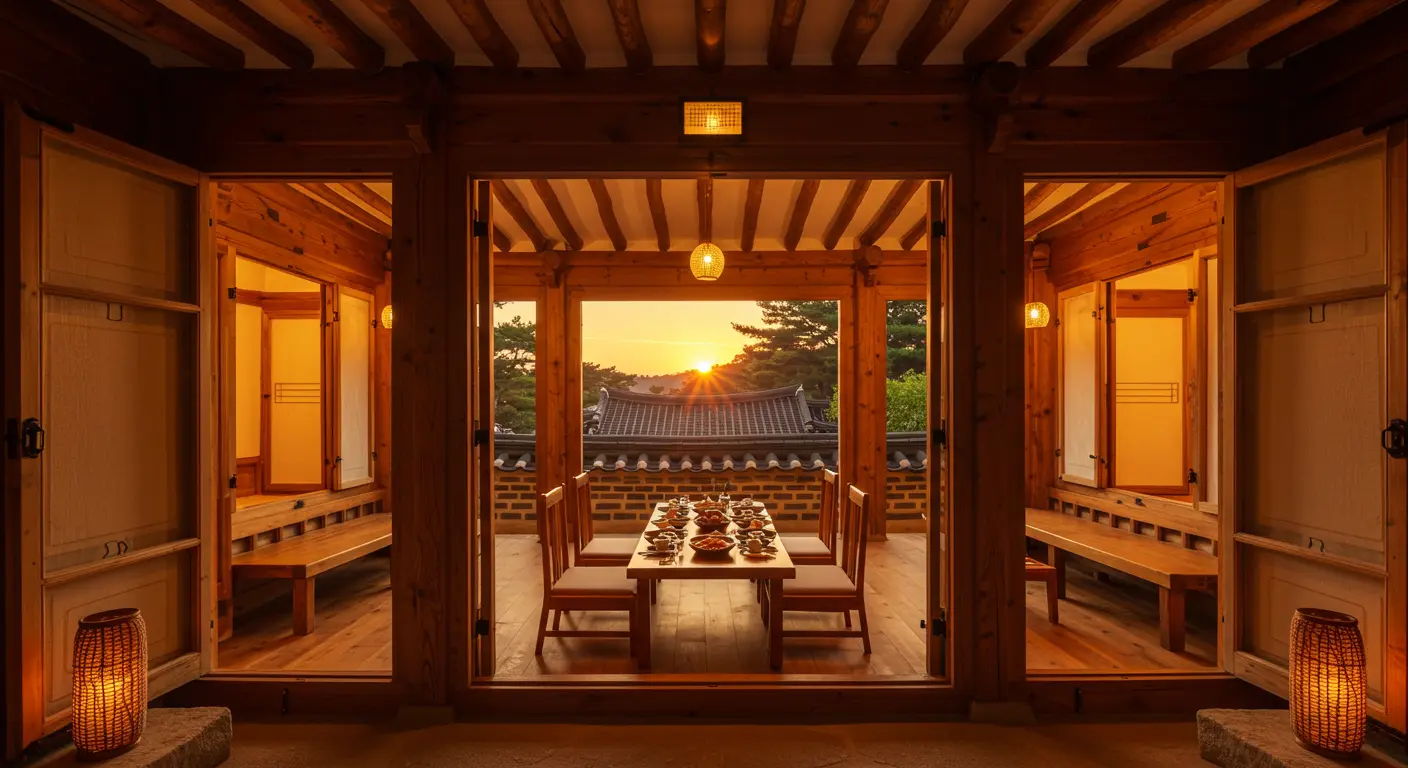
Korean banchan culture isn’t just a way of eating; it’s a philosophy of life refined over centuries. Harmony of colors, a spirit of community, clever preservation: there’s a surprising amount of wisdom packed into every small plate.
The Modern Value of Banchan
- Balanced variety: small portions of many dishes make a varied meal the default.
- Sustainability: fermentation and pickling stretch seasonal produce and cut food waste.
- Connection: sharing dishes turns every meal into a conversation.
- Everyday pleasure: different colors, textures, and flavors keep each bite interesting.
- Cultural identity: banchan keep Korean values alive in a globalized world.
In an era of solo dining, the togetherness at the heart of Korean banchan culture feels more valuable than ever. Even as people eat alone more often, sitting down with family or friends over shared dishes still feels special.
For many international fans, the appeal goes beyond flavor. It’s the idea that a meal can be balanced, generous, and social all at once, which fits naturally with today’s interest in mindful, plant-forward eating.
With more single-person households and busier schedules, the task is to protect the core values of Korean banchan culture (variety, balance, and sharing) while letting the format evolve, from meal-prep containers to banchan subscriptions.
In the end, banchan are a living heritage of how to eat well together. Understanding and passing on that idea may be one of the most meaningful gifts we can leave the next generation.
7. Korean Banchan Culture FAQ
Why do Koreans serve all the banchan at once?
Serving everything together reflects the yin-yang and Five Elements idea of harmony, where colors and flavors balance each other on one table. It also expresses the communal spirit of Korean banchan culture. Because no dish outranks another, there’s no reason to serve them in sequence.
Is banchan free at Korean restaurants?
In most Korean restaurants, yes. Banchan come with your main order at no extra cost, and refills are usually free too. Some delivery-focused or budget eateries now charge for extra portions because of rising food prices, so check for a self-serve station or simply ask.
Is it rude to ask for more banchan?
Not at all. Asking for a refill is completely normal and tells the staff you enjoyed their cooking. Just ask politely and try not to request more than you’ll actually eat.
Do I have to finish every side dish?
No, you don’t need to clear every plate. Banchan are meant for sampling, so eat what you enjoy. Skipping refills you won’t finish is the easiest way to avoid food waste.
How many banchan come with a typical meal?
A home meal usually includes three to five banchan alongside rice, soup, and kimchi. Restaurants commonly serve anywhere from three to ten, while a full hanjeongsik course can cover the entire table. The number varies by region, season, and price.
Can you enjoy banchan culture living alone?
Absolutely. Make or buy two or three banchan on the weekend, store them in small containers, and pair them with rice during the week. You can also invite friends over for a banchan-sharing night, since variety and balance work just as well for one as for a crowd.
Learn More About Korean Food Culture
1 · The global K-food craze
Buldak Ramen Craze: How Korea’s Ramyeon Exports Broke Records
How Korea’s love of spice won over the world.
2 · Fermentation at home
15 Ways to Ferment Kimchi Without a Fridge (2026 Guide)
Make authentic, well-aged kimchi in any climate.
3 · A royal table at home
Hotel Del Luna Korean Table Setting Recipes
Recreate a K-drama banchan spread in your own kitchen.
4 · Korean comfort food
A Foreigner’s Guide to Korean Hangover Soups
From bean sprout soup to dried pollack soup, explained.
More stories about Korean food culture and philosophy are on the way.
Have a question about Korean banchan culture? Share it in the comments below, and we’ll answer it!