
Originally published: | Last updated:
Hello, 365 Days of K-Life readers!
We first published this guide in July 2025, and it quickly became one of our most-read articles — proof that people everywhere want to ferment kimchi without a fridge. Now, with the global kimchi market surpassing $5.8 billion in 2026 and new smart fermentation tech hitting the scene, we’ve completely refreshed this guide with the latest science, tools, and trends.
Whether you’re an expat in Southeast Asia, a college student in Europe, or a fermentation hobbyist in the Americas, these 15 proven methods for aging kimchi without a refrigerator will help you create authentic, deeply flavored kimchi no matter where you live.
By the end of this article, you’ll have the knowledge and confidence to become a kimchi fermentation master — so let’s dive in!
You don’t need a dedicated kimchi fridge to age perfect kimchi. With 15 science-backed methods for controlling temperature, humidity, and salinity, you can recreate authentic Korean flavors in any climate on Earth. Understand the fermentation science, choose the right method for your environment, and enjoy homemade kimchi that rivals anything from Seoul.
Table of Contents
- 1. The Science Behind How to Ferment Kimchi Without a Fridge
- 2. What’s New in 2026: Kimchi Fermentation Trends
- 3. Climate-Specific Kimchi Aging Strategies
- 4. 15 Ways to Age Kimchi Without a Refrigerator
- 5. Common Failures and How to Fix Them
- 6. Safe Fermentation Practices
- 7. Aging Time Calculator by Temperature
- 8. Frequently Asked Questions (FAQ)
1. The Science Behind How to Ferment Kimchi Without a Fridge
You absolutely can ferment kimchi without a fridge — and once you understand the science, you’ll wonder why you ever thought you needed one. At its core, kimchi fermentation is a complex microbial ecosystem driven primarily by Lactobacillus and other lactic acid bacteria (LAB). Traditional Korean kimchi refrigerators — called gimchi naengjanggo (김치냉장고) — work by maintaining a constant low temperature of 0–4°C (32–39°F) to enable slow fermentation, which produces optimal flavor and preserves nutrition. But the refrigerator is just a tool to control temperature. Once you understand the underlying principles, you can achieve the same results using everyday equipment.
A 2026 study published in the journal Electronics by researchers at Korean universities demonstrated that real-time monitoring of kimchi fermentation using wireless sensors and Arduino boards can detect fermentation anomalies with high accuracy. This kind of research confirms what Korean grandmothers have known for centuries: fermentation is all about managing the environment.
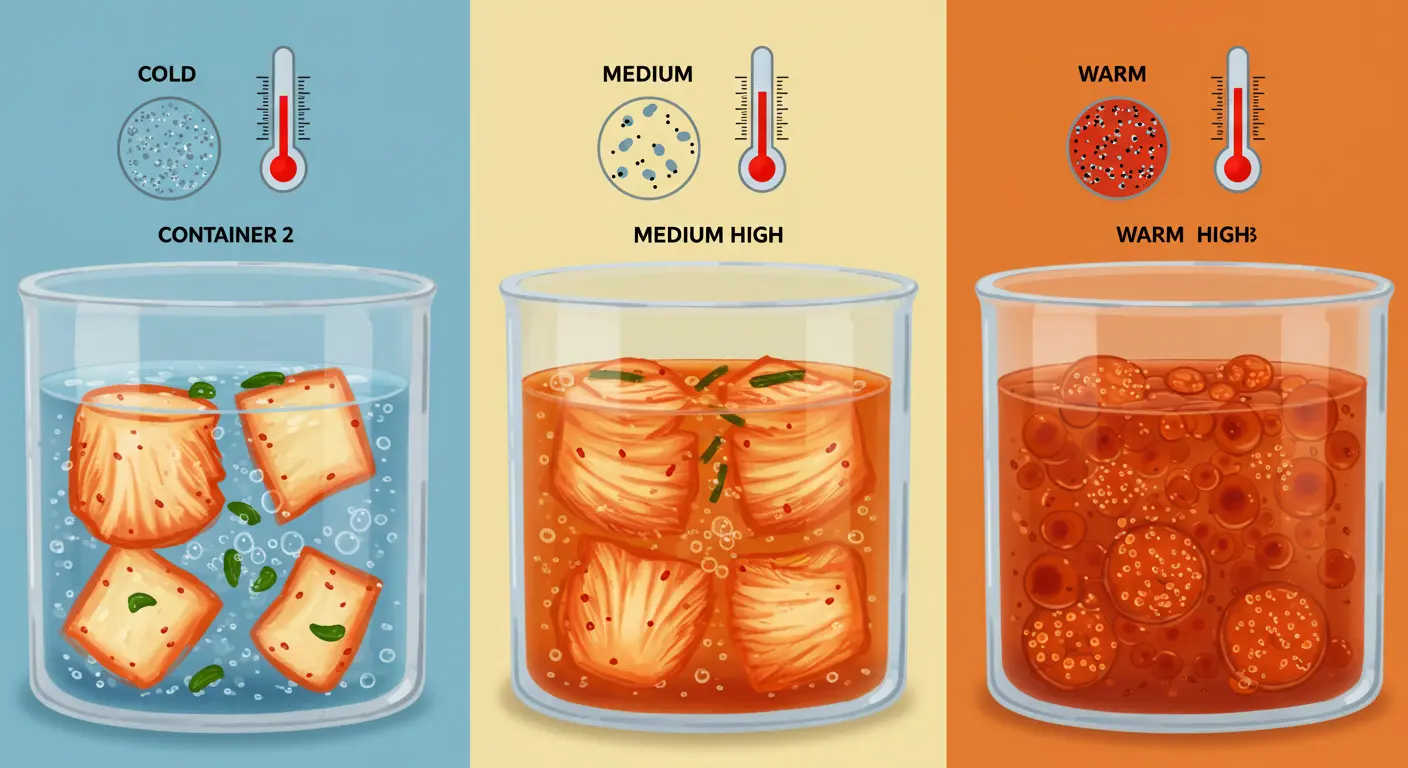
The Three Stages of Kimchi Fermentation
- Stage 1 — Initial Fermentation: 15–20°C (59–68°F), lasting 12–24 hours. Leuconostoc mesenteroides bacteria kick off the process, producing CO₂ and lactic acid.
- Stage 2 — Main Fermentation: 5–10°C (41–50°F), lasting 3–7 days. Lactobacillus plantarum takes over, developing the characteristic tangy flavor.
- Stage 3 — Cold Aging: 0–4°C (32–39°F), lasting 2–4 weeks. Slow maturation deepens flavor complexity while preserving crunch.
2. What’s New in 2026: Kimchi Fermentation Trends
The world of kimchi has evolved dramatically since we first published this guide. Here are the biggest developments shaping how people ferment kimchi at home in 2026.
The Global Kimchi Boom
The global kimchi market reached an estimated $5.8 billion in 2026, with projections showing growth to nearly $8.6 billion by 2034. This isn’t just a K-pop-driven fad — it reflects a genuine shift in how people worldwide think about gut health and functional foods. Kimchi has officially graduated from “exotic side dish” to mainstream pantry staple, appearing on restaurant menus from Los Angeles to London to Lagos.
Smart Fermentation Technology
If you’re a tech-savvy fermenter, 2026 has been a breakthrough year. Countertop smart fermentation devices — like those with preset kimchi modes, automatic heating and cooling, and app-based monitoring — have made DIY fermentation more accessible than ever. Meanwhile, academic researchers have developed Arduino-based wireless sensor networks that can monitor pressure, pH, and temperature in real time, alerting you to fermentation anomalies before they become problems.
The Vegan Kimchi Revolution
One of the biggest shifts in the kimchi world is the explosive growth of vegan kimchi. Traditional kimchi uses fish sauce (aekjeot, 액젓) or salted shrimp (saeujeot, 새우젓) for umami depth, but plant-based alternatives are now everywhere. Inspired by Korean Buddhist temple cuisine (sachal eumsik, 사찰음식), home fermenters are using Korean soup soy sauce (guk-ganjang, 국간장), miso paste, or kelp broth to create deeply savory kimchi without any animal products. Premium vegan kimchi lines are expanding rapidly in European and North American markets.
Low-Sodium and Sugar-Free Variations
In Korea, the 2026 food trend buzzword is “Jeosok-noha” (저속노화) — meaning “low-slow aging,” a lifestyle philosophy focused on gradual, sustainable wellness. This has driven a surge in low-sodium kimchi and zero-sugar gochujang (고추장, Korean chili paste), letting health-conscious fermenters keep the bold umami flavor while reducing dietary concerns.
3. Climate-Specific Kimchi Aging Strategies
After testing kimchi fermentation methods across five continents, we’ve found that there’s an optimized approach for every climate zone. The key variables are temperature, humidity, and seasonal changes — and getting these right means the difference between phenomenal kimchi and a soggy disappointment.
Tropical Climates (Southeast Asia, Central/South America, Sub-Saharan Africa)
Best approach: Cooler box + ice packs, or smart fermentation device
Recommended timing: Maximum 6 hours at room temperature, then 72 hours of active cooling
Pro tip: In 2026, affordable countertop fermenters with cooling functions have become a game-changer for tropical fermenters
Temperate Climates (Europe, North America, Northeast Asia)
Best approach: Basement, cold room, or standard refrigerator
Recommended timing: 12 hours at room temperature, then 5–7 days of low-temperature aging
Pro tip: Many European and American homes have basements that naturally stay at 10–15°C — perfect for the main fermentation stage
Arid Climates (Middle East, Inland Australia, Southwestern US)
Best approach: Sealed containers with humidity control + temperature management
Critical factor: Preventing moisture evaporation is essential — use airtight containers and consider wrapping in damp cloth
Pro tip: The Middle East kimchi market is growing at 5–7% annually, driven by Korea’s expanding expat community and rising interest in fermented foods
Cold Climates (Scandinavia, Canada, Russia, Northern Japan)
Best approach: Insulated porch storage, garage with temperature monitoring
Recommended timing: Extended initial fermentation indoors (18–24 hours), then move to naturally cold environments
Pro tip: Winter is your best friend — your garage or enclosed porch can function like a natural kimchi fridge. Just watch for freezing!
4. 15 Ways to Age Kimchi Without a Refrigerator
Indoor Temperature Control Methods (1–5)
1. Standard Refrigerator + Strategic Placement
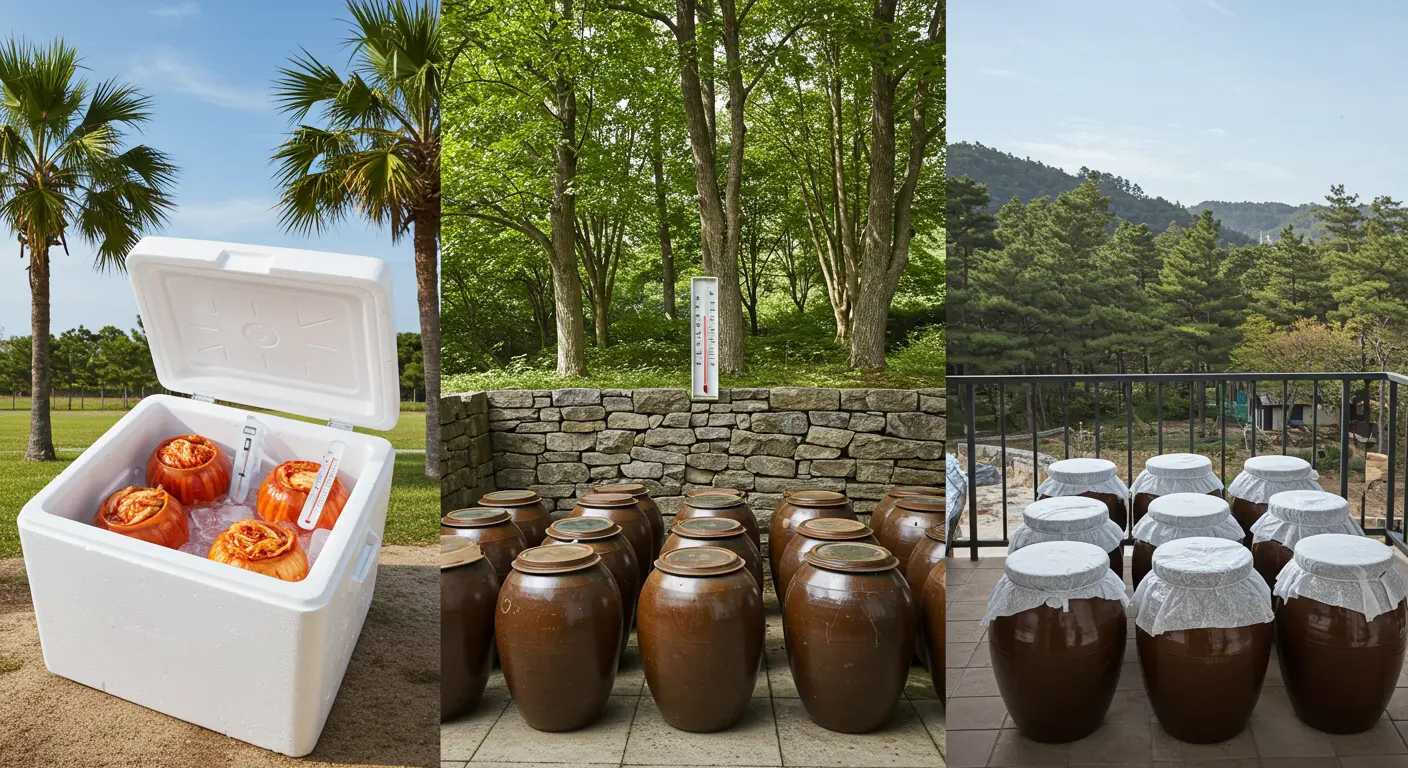
Set your refrigerator to 4–6°C (39–43°F) and store kimchi on the middle shelf, where temperature fluctuations are minimal. Avoid the door shelf — it’s the warmest and most variable spot. Use airtight containers to prevent kimchi odors from transferring to other foods. This is the simplest starting point for beginners and works well as a long-term aging solution.
2. Styrofoam Box + Ice Packs
Place your kimchi container alongside reusable ice packs inside a large Styrofoam cooler to maintain a steady 5–8°C (41–46°F). Swap out the ice packs every 12 hours. This low-cost, off-grid solution is perfect for power outages, camping trips, or homes without reliable refrigeration. Think of it as a DIY kimchi fridge on a budget — it costs under $15 to set up.
3. Basement or Cold Room
If you have access to a basement or cellar that naturally stays between 10–15°C (50–59°F) year-round, you’ve struck fermentation gold. Place your kimchi in an area with good air circulation, away from direct sunlight. This method closely mimics how Koreans traditionally aged kimchi before electric refrigerators existed — using the stable underground temperature as a natural regulator.
4. Air Conditioner + Timer
Dedicate a small room or closet and run the air conditioner intermittently to maintain 15–18°C (59–64°F). Using a timer saves electricity while keeping temperatures consistent. This works particularly well in tropical regions where ambient temperatures make room-temperature fermentation too fast.
5. Wine Fridge Conversion
Wine fridges typically offer precise temperature control between 8–12°C (46–54°F) and produce minimal vibration — both ideal for kimchi maturation. If you have a wine fridge that isn’t fully stocked, dedicating a shelf to kimchi is one of the most elegant solutions available. The low-vibration environment is especially beneficial because agitation can disrupt the slow fermentation process.
Natural Environment Methods (6–10)
6. Winter Porch or Balcony
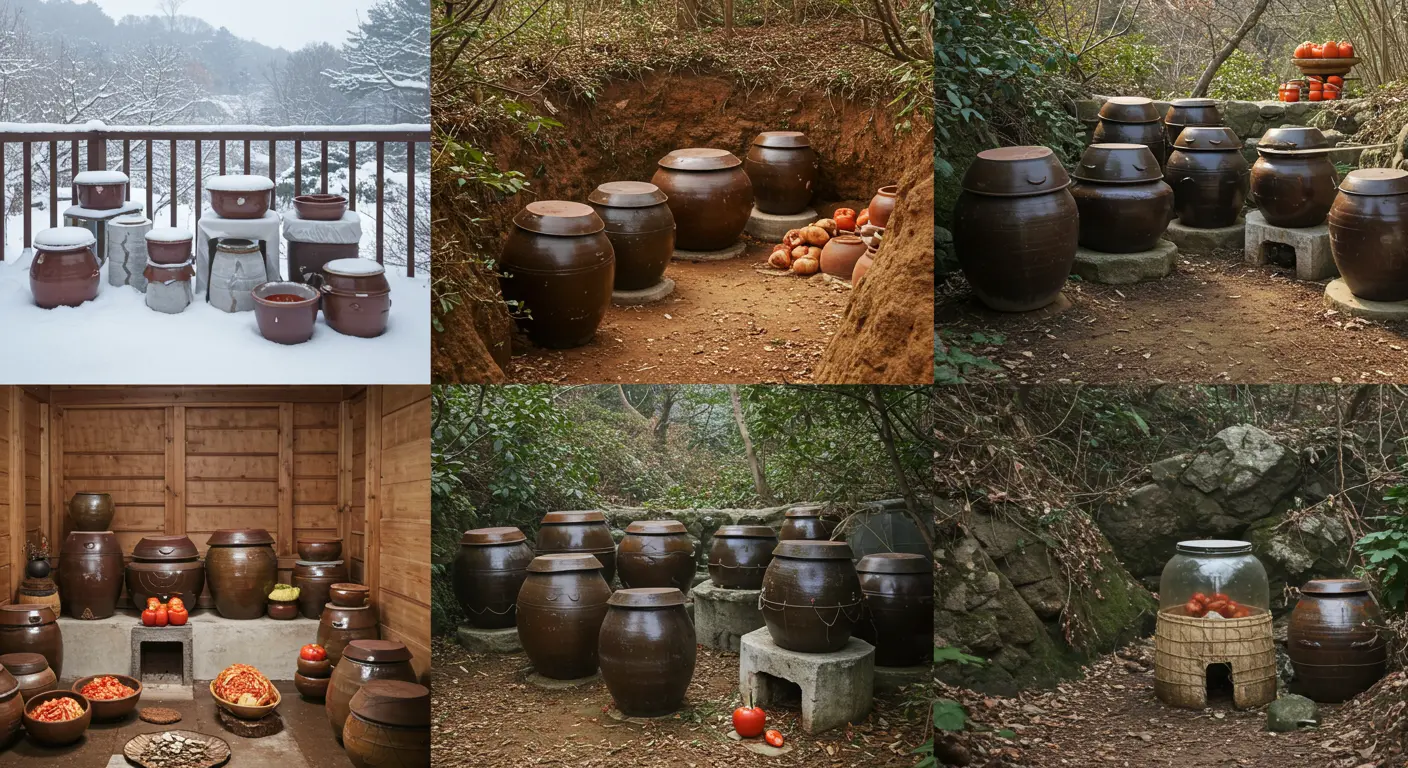
In colder months, wrap your kimchi container in a blanket on an enclosed porch or balcony to moderate temperature swings. The insulation prevents freezing on bitter nights while keeping temperatures in the ideal 0–5°C (32–41°F) range. Move the container indoors if nighttime temperatures drop well below freezing, as frozen kimchi loses its characteristic crunch.
7. Underground Burial (Where Feasible)
If you have a backyard, dig down about 50 cm (20 inches) and bury your kimchi jars. This is the original Korean method — the traditional kimjang (김장) practice that UNESCO recognized as an Intangible Cultural Heritage of Humanity. Ground temperature stays remarkably stable year-round, typically between 10–15°C (50–59°F) below the frost line. Use ceramic onggi (옹기) pots for best results, as they allow the kimchi to “breathe.”
8. Insulated Garage or Shed
A well-insulated garage or storage shed naturally follows seasonal temperature patterns that can work in your favor. During spring and fall, many garages sit in the ideal 10–18°C (50–64°F) range without any intervention. In summer, you may need supplemental cooling (a small portable AC or additional ice packs).
9. Well Water or Spring Proximity
Take advantage of the naturally cool temperatures near a well, spring, or underground water source. Don’t submerge your kimchi directly — instead, place containers nearby to benefit from the ambient cooling effect. Well water typically runs 10–15°C (50–59°F) year-round, creating a natural cold zone.
10. Natural Caves or Rock Formations
Caves and large rock crevices maintain remarkably stable temperatures — often around 12–14°C (54–57°F) year-round. If you have access to such formations, they provide an ideal aging environment. Pay close attention to humidity levels and ventilation, and ensure hygienic storage to prevent contamination from wildlife or moisture.
Technology-Assisted Methods (11–15)
11. Smart Countertop Fermenter
This is one of the biggest game-changers in 2026. Devices like dedicated home fermentation machines now offer preset modes specifically for kimchi, with automatic temperature control that handles both the warm initial phase and the cold aging phase. Many models cost $100–$300 and can also make yogurt, kombucha, and natto. If you ferment regularly, this is one of the best investments you can make.
12. Aquarium Heater/Cooler Circulation System
Repurpose an aquarium water circulation system by combining a heater and cooler to maintain a water bath at your target temperature. Place sealed kimchi containers in the water bath. Water’s high heat capacity keeps temperatures remarkably stable — even a small fluctuation in air temperature barely affects the water bath.
13. Wi-Fi Smart Thermostat + Sensor
Pair a Wi-Fi-connected thermometer/hygrometer with a smart plug to automate cooling in any space. Monitor and adjust temperature remotely from your smartphone. In 2026, researchers have demonstrated that Arduino-based wireless sensor networks can track fermentation pressure and temperature at 10-minute intervals — and affordable consumer versions of this technology are now available.
14. Vacuum Packing + Temperature Control
Vacuum-seal your kimchi to prevent oxygen contact, creating an anaerobic fermentation environment that produces a cleaner, more refined flavor profile. Combine this with any cold-storage method for precise results. This technique is especially popular among fermenters who want to minimize the strong kimchi odor during aging.
15. DIY Peltier Cooler Fermentation Chamber
Build a homemade kimchi ager from a Styrofoam box, a digital temperature sensor, and a Peltier thermoelectric cooler. Total cost: $30–$60. The Peltier element cools one side while heating the other, and combined with a simple thermostat controller, you can maintain precise temperatures within 1–2°C of your target. This is the ultimate weekend DIY project for the hands-on fermenter.
Aging Time Calculator by Temperature
Enter your current ambient temperature below and we’ll calculate the optimal kimchi aging timeline for your environment.
5. Common Failures and How to Fix Them
Diagnosing and Solving Fermentation Problems
Problem 1: Kimchi turns sour too fast
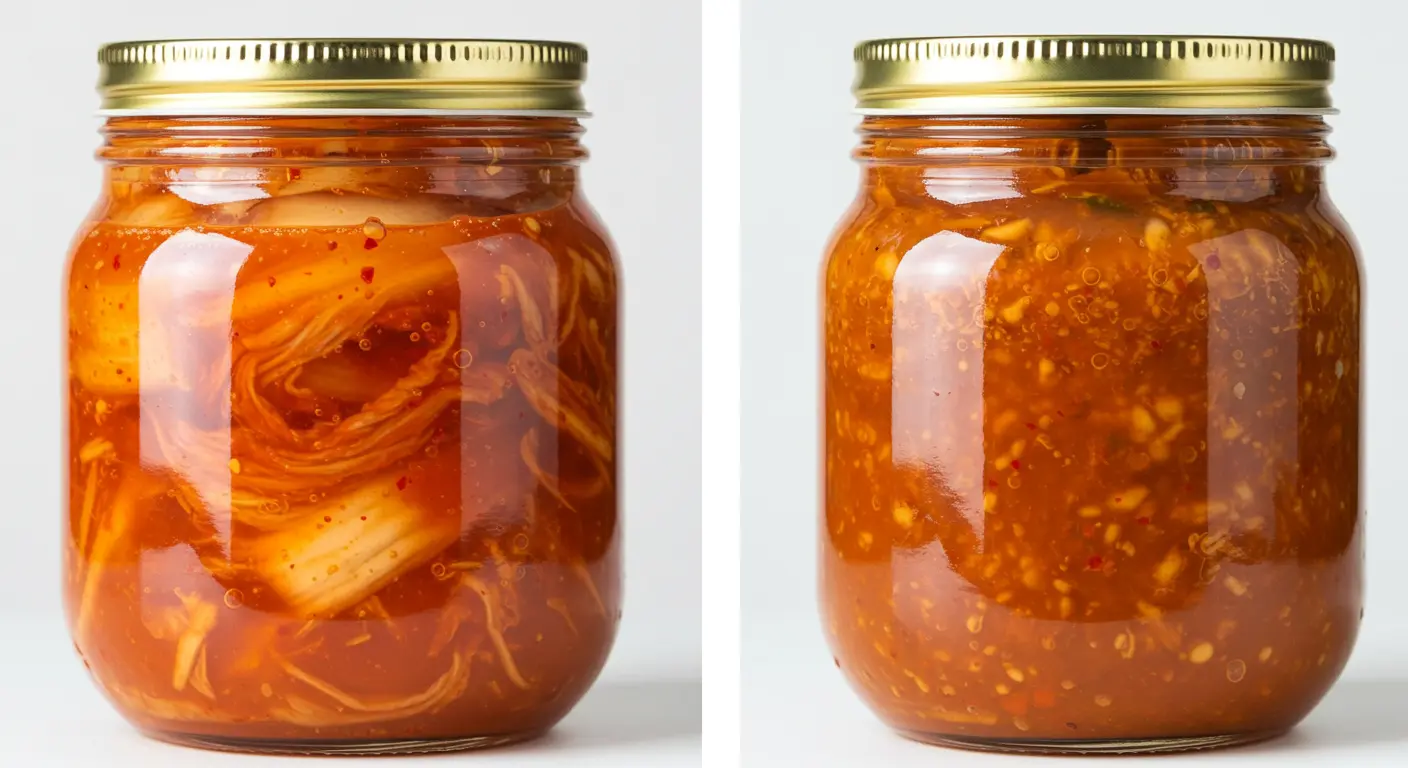
Cause: Temperature too high during aging, or not enough salt in the initial preparationFix: Immediately transfer to cold storage at 5°C (41°F) or below. If the sourness is already advanced, use the kimchi for cooked dishes like kimchi jjigae (김치찌개, kimchi stew) or kimchi fried rice, where the acidity is actually a benefit
Problem 2: No fermentation activity at all
Cause: Temperature too low, salt content too high, or iodized salt used (iodine can inhibit lactic acid bacteria)Fix: Move to a 15–20°C (59–68°F) environment for 12–24 hours to jump-start fermentation, then transfer to cold storage. Always use non-iodized salt (kosher salt or Korean coarse sea salt)
Problem 3: Strange or off-putting odor
Cause: Harmful bacterial growth, possibly from contaminated containers or ingredientsFix: Discard immediately — do not taste. Start fresh with thoroughly sanitized equipment and new ingredients. This is a food safety issue that should never be ignored
Problem 4: Kimchi is mushy and soft
Cause: Over-fermentation, using overly tender cabbage, or insufficient salting during preparationFix: For next time, choose firmer napa cabbage heads (heavy for their size, with tight leaves), reduce fermentation time, and ensure proper salting. Mushy kimchi is still safe and excellent in soups and stews
Problem 5: Kimchi tastes bland or flat
Cause: Insufficient seasoning, too much salt suppressing fermentation, or not enough fermentation timeFix: Allow more time at the main fermentation temperature (5–10°C). If making vegan kimchi, try adding Korean soup soy sauce (guk-ganjang) or a tablespoon of miso paste for extra umami depth
6. Safe Fermentation Practices
– This article is for educational and informational purposes only and does not replace professional food safety guidance
– If you notice unusual odors, visible mold, or slimy textures during fermentation, stop consuming and discard immediately
– Individuals with compromised immune systems should consult a healthcare provider before consuming homemade fermented foods
– If you are pregnant or have a specific medical condition, consult your doctor before adding homemade fermented foods to your diet
Hygiene Checklist for Safe Fermentation
- Wash all tools, jars, and containers in hot soapy water and dry thoroughly before use — or sanitize by submerging in hot water at 71°C (160°F) for at least 30 seconds
- Wash hands thoroughly and wear food-safe disposable gloves during preparation
- Use non-iodized salt (kosher, sea salt, or Korean coarse salt) — iodized salt can inhibit beneficial bacteria
- Check your kimchi daily during the first few days of fermentation: monitor smell, color, and texture
- Discard immediately if you see any mold, unusual colors, or detect foul odors distinctly different from normal kimchi tang
- Store fermentation vessels away from direct sunlight, heat sources, and dust
- Keep kimchi submerged under its own brine to prevent exposure to air, which can encourage mold growth
Frequently Asked Questions (FAQ)
Q1. Can I make great kimchi without a kimchi refrigerator?
Absolutely. If you control the temperature and timing correctly, you can achieve results on par with a dedicated kimchi fridge. The key is nailing the initial fermentation (12–24 hours at 15–20°C), followed by a proper cold aging phase (2–4 weeks at 0–4°C). Thousands of Korean families made incredible kimchi for centuries before kimchi fridges were invented in the 1990s.
Q2. Can I ferment kimchi in tropical climates?
Yes — it just requires more active temperature management. Use an ice chest, air conditioner, or a 2026-era smart fermentation device to keep things cool. Limit room-temperature fermentation to no more than 6 hours, then cool immediately. Many kimchi enthusiasts in Thailand, Indonesia, and Brazil have mastered this approach.
Q3. What are the most important factors for fermenting kimchi?
Temperature control is the single most important variable. Follow the three-stage regime: initial fermentation at 15–20°C (59–68°F), main fermentation at 5–10°C (41–50°F), and long-term aging at 0–4°C (32–39°F). After temperature, salinity and ingredient freshness are the next biggest factors.
Q4. Can I rescue kimchi if fermentation goes wrong?
It depends on what went wrong. Over-fermented (too sour) kimchi is perfectly safe and actually preferred in many cooked dishes — try it in kimchi stew, kimchi fried rice, or kimchi pancakes. However, if you see mold or detect truly foul odors (not just strong fermented tang), discard it immediately.
Q5. What’s the difference between a regular fridge and a kimchi fridge?
Kimchi refrigerators maintain a constant temperature of 0–4°C (32–39°F) with high humidity — conditions optimized for slow, steady aging. Standard refrigerators tend to be drier and experience bigger temperature fluctuations (especially when opened frequently). However, with proper airtight containers and strategic shelf placement, a regular fridge can produce excellent results.
Q6. What is vegan kimchi and does it ferment properly?
Vegan kimchi replaces traditional fish sauce or salted shrimp with plant-based umami sources — most commonly Korean soup soy sauce (guk-ganjang, 국간장), miso paste, or kelp broth. It ferments beautifully, and many people find the flavor brighter and cleaner. This approach is rooted in Korean Buddhist temple cuisine, which has been perfecting plant-based fermentation for centuries. It’s one of the biggest kimchi trends of 2026.
Final Thoughts
Don’t let the absence of a kimchi fridge hold you back. By understanding the fermentation science and selecting the right method for your environment, you can make deeply flavorful, authentically aged kimchi anywhere on the planet. Temperature control is king — and with 2026’s smart fermentation tools, it’s never been easier to get it right.
Kimchi (김치, Korea’s iconic fermented vegetable dish) is more than just food — it’s a living embodiment of Korean wisdom, patience, and harmony with nature. Each batch you make connects you to a culinary tradition that stretches back over a thousand years. Share your fermentation experiments in the comments — your experience could help kimchi lovers around the world.
Want to go deeper into K-food culture? Check out our guides to the philosophy behind Korean banchan culture and why Korean ramen exports are breaking records worldwide.
Recommended Reading
- UConn Research: Why Kimchi Could Be Your Next Superfood
- Michelin Guide: The Korean Superfood — Kimchi and Its Health Benefits
- Healthline: 9 Benefits of Kimchi (Evidence-Based, Updated 2026)
- University of Georgia: A Science-Based Guide to Safe Kimchi Fermentation
- ScienceDaily: Study Reveals How Kimchi Boosts the Immune System